Showing posts with label Scriptures (T). Show all posts

Wednesday, February 26, 2014

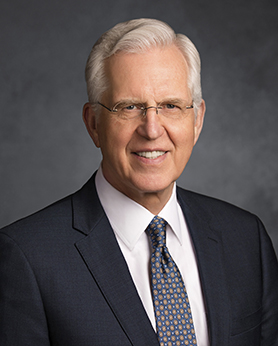
When Thou Art Converted (D. Todd Christofferson of the Presidency of the Seventy, April 2004 General Conference)

Source
How can you become converted? How can you make the gospel of Jesus Christ not just an influence in your life but the controlling influence and, indeed, the very core of what you are?
My comments are directed particularly to young people, although I hope they may be helpful to everyone.

Years ago when I served as a stake president, a man came to confess a transgression. His confession surprised me. He had been an active member of the Church for years. I wondered how a person with his experience could have committed the sin that he did. After some pondering, it came to me that this brother had never become truly converted. Despite his Church activity, the gospel had not penetrated his heart. It was only an external influence in his life. When he was in wholesome environments, he kept the commandments, but in a different environment, other influences might control his actions.

How can you become converted? How can you make the gospel of Jesus Christ not just an influence in your life but the controlling influence and, indeed, the very core of what you are? The ancient prophet Jeremiah spoke of the law of God, the gospel, being written in our hearts. He quotes the Lord speaking about us, His people in the latter days: “I will put my law in their inward parts, and write it in their hearts; and will be their God, and they shall be my people.” 1

Do you want this for yourself? I can tell you how that can happen, but it must be something you want. The gospel cannot be written in your heart unless your heart is open. Without a heartfelt desire, you can participate in sacrament meetings, classes, and Church activities and do the things I will tell you, but it won’t make much difference. But if your heart is open and willing, like the heart of a child, 2 let me tell you what you can do to be converted.

As a first step, you must lay aside any feeling of pride that is so common in the world today. By this I mean the attitude that rejects the authority of God to rule in our lives. This attitude was described by the Lord to Joseph Smith when He said, “They seek not the Lord to establish his righteousness, but every man walketh in his own way, and after the image of his own god.” 3 You hear it expressed today in phrases such as “Do your own thing” or “Right and wrong depend on what I feel is right for me.” That attitude is a rebellion against God, just as Lucifer rebelled against God in the premortal world. He rejected God’s right to declare the truth and establish the law. 4 Satan wanted, and still wants, the power to declare arbitrarily what is right and wrong. Our beloved Creator does not force us to accept His authority, but willingly submitting to that authority is the first step in conversion.

Further, for the gospel to be written in your heart, you need to know what it is and grow to understand it more fully. That means you will study it. 5 When I say “study,” I mean something more than reading. It is a good thing sometimes to read a book of scripture within a set period of time to get an overall sense of its message, but for conversion, you should care more about the amount of time you spend in the scriptures than about the amount you read in that time. I see you sometimes reading a few verses, stopping to ponder them, carefully reading the verses again, and as you think about what they mean, praying for understanding, asking questions in your mind, waiting for spiritual impressions, and writing down the impressions and insights that come so you can remember and learn more. Studying in this way, you may not read a lot of chapters or verses in a half hour, but you will be giving place in your heart for the word of God, and He will be speaking to you. Remember Alma’s description of what it feels like: “It beginneth to enlarge my soul; yea, it beginneth to enlighten my understanding, yea, it beginneth to be delicious to me.” 6 You will know that the gospel is being written in your heart, that your conversion is happening, as the word of the Lord from His prophets, past and present, feels more and more delicious to your soul.

I mentioned praying as you study to understand the scriptures, but your prayers must not be limited to that. In the Book of Mormon, Amulek tells us we should pray about everything in our lives. He says, “Pour out your souls [to God] in your closets, and your secret places, and in your wilderness.” 7 Your Heavenly Father wants you to pray about your hopes and fears, your friends and family, your school and work, and the needs of those around you. Most of all, you should pray to be filled with the love of Christ. This love is given to those who are true followers of Jesus Christ, who ask for it with all the energy of their heart. 8 This love is the fruit of the tree of life, 9 and tasting it is a major part of your conversion because once you have felt your Savior’s love for you, even the smallest part, you will feel secure, and a love for Him and for your Heavenly Father will grow within you. In your heart you will want to do what these holy beings ask of you. Go often to your closet, your secret place, your wilderness. Thank God for your blessings; ask for His help; ask Him to bestow upon you the pure love of Christ. Sometimes fasting will help.

After Amulek talked about prayer, he spoke about something else that is an important element of your conversion—serving others. Otherwise, he said, “your prayer is vain, and availeth you nothing.” 10 In other words, to be converted, you must not only open your heart to a knowledge of the gospel and the love of God, you must practice the gospel law. You cannot fully understand or appreciate it unless you personally apply it in your life. Jesus said that He came to serve, not to be served. 11 So it must be with you. You must look outward and care about others. You can be compassionate; you can be friendly; you can share; you can help others in a hundred small ways. As you do, the gospel of Jesus Christ will become a part of you.

Let me mention one other thing. In ancient times when people wanted to worship the Lord and seek His blessings, they often brought a gift. For example, when they went to the temple, they brought a sacrifice to place on the altar. After His Atonement and Resurrection, the Savior said He would no longer accept burnt offerings of animals. The gift or sacrifice He will accept now is “a broken heart and a contrite spirit.” 12 As you seek the blessing of conversion, you can offer the Lord the gift of your broken, or repentant, heart and your contrite, or obedient, spirit. In reality, it is the gift of yourself—what you are and what you are becoming.

Is there something in you or in your life that is impure or unworthy? When you get rid of it, that is a gift to the Savior. Is there a good habit or quality that is lacking in your life? When you adopt it and make it part of your character, you are giving a gift to the Lord. 13 Sometimes this is hard to do, but would your gifts of repentance and obedience be worthy gifts if they cost you nothing? 14 Don’t be afraid of the effort required. And remember, you don’t have to do it alone. Jesus Christ will help you make of yourself a worthy gift. His grace will make you clean, even holy. Eventually, you will become like Him, “perfect in Christ.” 15

With conversion, you will wear a protective armor, “the whole armour of God,” 16 and the words of Christ, which come by the Holy Spirit, “will tell you all things” you should do. 17

In 1992 two sister missionaries in Zagreb, Croatia, were returning to their apartment one evening. Their last teaching appointment had been some distance away, and it was getting dark. Several men on the trolley made crude comments and became rather menacing. Feeling threatened, the sisters got off the trolley at the next stop just as the doors closed so no one could follow them. Having avoided that problem, they realized they were in a place unknown to either of them. As they turned to look for help, they saw a woman. The missionaries explained that they were lost and asked the woman if she could direct them. She knew where they could find another trolley to take them home and invited them to follow her. On the way they had to pass a bar with patrons sitting along the sidewalk in the gathering darkness. These men also appeared threatening. Nevertheless, the two young women had the distinct impression that the men could not see them. They walked by, apparently invisible to those who might have had a mind to harm them. When the sisters and their guide reached the stop, the trolley they needed was just arriving. They turned to thank the woman, but she was nowhere to be seen. 18

These missionaries were furnished a guide and other blessings to protect them physically. As you become converted, you will have comparable protections to keep you from temptation and deliver you from evil. 19 Sometimes evil will not find you. Sometimes you will be protected when evil is made invisible to you. Even when you must confront it directly, you will do so with faith, not fear.

We have talked of desire, submissiveness to God, study, prayer, service, repentance, and obedience. From these, coupled with your worship and activity in Church, will come testimony and conversion. The gospel won’t be just an influence in your life—it will be what you are. Plead with God in the name of Christ to write the gospel in your mind that you may have understanding and in your heart that you may love to do His will. 20 Pursue this blessing diligently and patiently, and you will receive it, for God “is gracious and merciful, … and of great kindness.” 21 I so bear witness in the name of Jesus Christ, amen.

Notes:

 1.  Jer. 31:33. Ezekiel said conversion is like the Lord taking away our “stony heart” and giving us a heart that loves Him and His gospel (see Ezek. 11:19–20). Surely this is what happened to the people of King Benjamin when they said their hearts had been changed and they didn’t even want to do evil anymore “but to do good continually” (Mosiah 5:2).

 2. See Matt. 18:3–4.

 3.  D&C 1:16; see also Hel. 12:6.

 4. See D&C 76:25–29.

 5. We are exceptionally fortunate to have so much of the recorded word of God at our fingertips. In prior ages of the world’s history, very few people had copies of the scriptures in their possession. They had to try to remember what they could whenever they heard scriptures read in sermons. What an incomparable blessing that you can have your own copy to read whenever you want. You can see how the gospel works in the lives of people who were converted, from Adam’s time down to our own time.

 6.  Alma 32:28.

 7.  Alma 34:26.

 8. See Moro. 7:47–48.

 9. See 1 Ne. 11:21–23.

 10.  Alma 34:28.

 11. See Mark 10:45. Christ told Peter that when he was converted, he should strengthen his brethren (see Luke 22:32).

 12.  3 Ne. 9:20.

 13. Along with the scriptures, the pamphlet For the Strength of Youth (2001) can guide you.

 14. Once when King David prepared to offer a sacrifice to the Lord, a loyal subject said he would give the king the place, the animals, and the firewood to make the sacrifice. But David declined, saying, “I will surely buy it of thee at a price: neither will I offer burnt offerings unto the Lord my God of that which doth cost me nothing” (2 Sam. 24:24).

 15. See Moro. 10:32–33.

 16. See Eph. 6:13–17.

 17.  2 Ne. 32:3.

 18. As related by Sister Nicole Christofferson Miller.

 19. See Matt. 6:13.

 20. See Heb. 8:10; Heb. 10:16.

 21.  Joel 2:13. “Draw near unto me and I will draw near unto you; seek me diligently and ye shall find me; ask, and ye shall receive; knock, and it shall be opened unto you” (D&C 88:63).

Tuesday, February 25, 2014

Watching with All Perseverance (David A. Bednar of the Quorum of the Twelve Apostles, April 2010 General Conference)

Source
I pray for the guidance of the Holy Ghost as I describe a spiritual early warning system that can help parents in Zion to be watchful and discerning concerning their children.... Parents who consistently read and talk about the Book of Mormon with their children, who share testimony spontaneously with their children, and who invite children as gospel learners to act and not merely be acted upon will be blessed with eyes that can see afar off and with ears that can hear the sound of the trumpet. The spiritual discernment and inspiration you will receive from the combination of these three holy habits will enable you to stand as watchmen on the tower for your families—”watching … with all perseverance”—to the blessing of your immediate family and your future posterity.

Recently I was driving my car as drops of rain from a thunderstorm began to fall on the windshield. On the side of the road, an electronic sign displayed a timely warning: “Standing Water Ahead.” The surface on which I was driving appeared to be quite safe. But this vital information enabled me to prepare for a potential hazard I had not expected and could not yet see. As I continued toward my destination, I slowed down and watched carefully for additional signs of danger.

Early warning signals are evident in many aspects of our lives. For example, a fever can be a first symptom of sickness or disease. Various financial and labor market indicators are used to forecast future trends in local and national economies. And depending upon the area of the world in which we live, we may receive flood, avalanche, hurricane, tsunami, tornado, or winter storm warnings.

We also are blessed by spiritual early warning signals as a source of protection and direction in our lives. Recall how Noah was alerted by God of things not yet seen, and he “prepared [the] ark to the saving of his house” (Hebrews 11:7).

Lehi was warned to leave Jerusalem and take his family into the wilderness because the people to whom he had declared repentance sought to kill him (see 1 Nephi 2:1–2).

The Savior Himself was spared through an angelic warning: “Behold, the angel of the Lord appeareth to Joseph in a dream, saying, Arise, and take the young child and his mother, and flee into Egypt, and be thou there until I bring thee word: for Herod will seek the young child to destroy him” (Matthew 2:13).

Consider the language of the Lord in the revelation known as the Word of Wisdom: “In consequence of evils and designs which do and will exist in the hearts of conspiring men in the last days, I have warned you, and forewarn you, by giving unto you this word of wisdom by revelation” (D&C 89:4).

Spiritual warnings should lead to increasingly vigilant watching. You and I live in “a day of warning” (D&C 63:58). And because we have been and will be warned, we need to be, as the Apostle Paul admonished, “watching … with all perseverance” (Ephesians 6:18).

I pray for the guidance of the Holy Ghost as I describe a spiritual early warning system that can help parents in Zion to be watchful and discerning concerning their children. This early warning system applies to children of all ages and contains three basic components: (1) reading and talking about the Book of Mormon with your children, (2) bearing testimony of gospel truths spontaneously with your children, and (3) inviting children as gospel learners to act and not merely be acted upon. Parents who do these things faithfully will be blessed to recognize early signals of spiritual growth in or challenges with their children and be better prepared to receive inspiration to strengthen and help those children.

Component Number One: Reading and Talking about the Book of Mormon
The Book of Mormon contains the fulness of the Savior’s gospel and is the only book the Lord Himself has testified to be true (see D&C 17:6; see also Russell M. Nelson, “A Testimony of the Book of Mormon,” Liahona, Jan. 2000, 84; Ensign, Nov. 1999, 70). Indeed, the Book of Mormon is the keystone of our religion.

The convincing and converting powers of the Book of Mormon come from both a central focus upon the Lord Jesus Christ and the inspired plainness and clarity of its teachings. Nephi declared, “My soul delighteth in plainness unto my people, that they may learn” (2 Nephi 25:4). The root word plain in this verse does not refer to things that are ordinary or simple; rather, it denotes instruction that is clear and easily understood.

The Book of Mormon is the most correct of any book on earth because it centers upon the Truth (see John 14:6; 1 Nephi 13:40), even Jesus Christ, and restores the plain and precious things that have been taken away from the true gospel (see 1 Nephi 13:26, 28–29, 32, 34–35, 40). The unique combination of these two factors—a focus on the Savior and the plainness of the teachings—powerfully invites the confirming witness of the third member of the Godhead, even the Holy Ghost. Consequently, the Book of Mormon speaks to the spirit and to the heart of the reader like no other volume of scripture.

The Prophet Joseph Smith taught that abiding by the precepts found in the Book of Mormon would help us “get nearer to God” than any other book (Teachings of Presidents of the Church: Joseph Smith [2007], 64). Regular reading of and talking about the Book of Mormon invite the power to resist temptation and to produce feelings of love within our families. And discussions about the doctrines and principles in the Book of Mormon provide opportunities for parents to observe their children, to listen to them, to learn from them, and to teach them.

Youth of all ages, even infants, can and do respond to the distinctive spirit of the Book of Mormon. Children may not understand all of the words and stories, but they certainly can feel the “familiar spirit” described by Isaiah (Isaiah 29:4; see also 2 Nephi 26:16). And the questions a child asks, the observations a child shares, and the discussions that occur provide crucial spiritual early warning signals. Importantly, such conversations can help parents to discern what their children are learning, thinking, and feeling about the truths contained in this sacred volume of scripture, as well as the difficulties they may be facing.

Component Number Two: Bearing Testimony Spontaneously
Testimony is personal knowledge, based upon the witness of the Holy Ghost, that certain facts of eternal significance are true. The Holy Ghost is the messenger for the Father and the Son and the teacher of and guide to all truth (see John 14:26; 16:13). Thus, “by the power of the Holy Ghost [we] may know the truth of all things” (Moroni 10:5).

The knowledge and spiritual conviction we receive from the Holy Ghost are the result of revelation. Seeking for and obtaining these blessings require a sincere heart, real intent, and faith in Christ (see Moroni 10:4). A personal testimony also brings responsibility and accountability.

Parents should be vigilant and spiritually attentive to spontaneously occurring opportunities to bear testimony to their children. Such occasions need not be programmed, scheduled, or scripted. In fact, the less regimented such testimony sharing is, the greater the likelihood for edification and lasting impact. “Neither take ye thought beforehand what ye shall say; but treasure up in your minds continually the words of life, and it shall be given you in the very hour that portion that shall be meted unto every man” (D&C 84:85).

For example, a naturally occurring family conversation at dinner may be the perfect setting for a parent to recount and testify of specific blessings he or she received during the course of relatively routine activities that day. And a testimony need not always begin with the phrase “I bear you my testimony.” Our witness can be declared as simply as “I know I was blessed with inspiration at work today” or “The truth in this scripture always has been a powerful source of direction for me.” Similar opportunities to bear testimony also can arise while traveling together in a car or bus or in a multitude of other settings.

The reactions of children to such impromptu testimony bearing and their eagerness or reluctance to participate are potent sources of spiritual early warning signals. A child’s expression about a lesson learned in family scripture study or a candid statement of concern about a gospel principle or practice can be most illuminating and help parents better understand a child’s specific question or needs. Such discussions—especially when parents are as eager to listen intently as they are to talk—can foster a supportive and secure environment in the home and encourage ongoing communication about difficult topics.

Component Number Three: Inviting Children to Act
In the grand division of all of God’s creations, there are “things to act and things to be acted upon” (2 Nephi 2:14). As children of our Heavenly Father, we have been blessed with the gift of moral agency, the capacity and power of independent action. Endowed with agency, we are agents, and we primarily are to act and not merely be acted upon—especially as we “seek learning … by study and also by faith” (D&C 88:118).

As gospel learners, we should be “doers of the word, and not hearers only” (James 1:22). Our hearts are opened to the influence of the Holy Ghost as we properly exercise agency and act in accordance with correct principles—and we thereby invite His teaching and testifying power. Parents have the sacred responsibility to help children to act and to seek learning by faith. And a child is never too young to take part in this pattern of learning.

Giving a man a fish feeds him for one meal. Teaching a man to fish feeds him for a lifetime. As parents and gospel instructors, you and I are not in the business of distributing fish; rather, our work is to help our children learn “to fish” and to become spiritually steadfast. This vital objective is best accomplished as we encourage our children to act in accordance with correct principles—as we help them to learn by doing. “If any man will do his will, he shall know of the doctrine, whether it be of God” (John 7:17). Such learning requires spiritual, mental, and physical exertion and not just passive reception.

Inviting children as gospel learners to act and not merely be acted upon builds on reading and talking about the Book of Mormon and bearing testimony spontaneously in the home. Imagine, for example, a family home evening in which children are invited and expected to come prepared to ask questions about what they are reading and learning in the Book of Mormon—or about an issue that recently was emphasized in a gospel discussion or spontaneous testimony in the home. And imagine further that the children ask questions the parents are not prepared adequately to answer. Some parents might be apprehensive about such an unstructured approach to home evening. But the best family home evenings are not necessarily the product of preprepared, purchased, or downloaded packets of outlines and visual aids. What a glorious opportunity for family members to search the scriptures together and to be tutored by the Holy Ghost. “For the preacher was no better than the hearer, neither was the teacher any better than the learner; … and they did all labor, every man according to his strength” (Alma 1:26).

Are you and I helping our children become agents who act and seek learning by study and by faith, or have we trained our children to wait to be taught and acted upon? Are we as parents primarily giving our children the equivalent of spiritual fish to eat, or are we consistently helping them to act, to learn for themselves, and to stand steadfast and immovable? Are we helping our children become anxiously engaged in asking, seeking, and knocking? (See 3 Nephi 14:7.)

The spiritual understanding you and I have been blessed to receive, and which has been confirmed as true in our hearts, simply cannot be given to our children. The tuition of diligence and of learning by study and also by faith must be paid to obtain and personally “own” such knowledge. Only in this way can what is known in the mind also be felt in the heart. Only in this way can a child move beyond relying upon the spiritual knowledge and experiences of parents and adults and claim those blessings for himself or herself. Only in this way can our children be prepared spiritually for the challenges of mortality.

Promise and Testimony
I bear witness that parents who consistently read and talk about the Book of Mormon with their children, who share testimony spontaneously with their children, and who invite children as gospel learners to act and not merely be acted upon will be blessed with eyes that can see afar off (see Moses 6:27) and with ears that can hear the sound of the trumpet (see Ezekiel 33:2–16). The spiritual discernment and inspiration you will receive from the combination of these three holy habits will enable you to stand as watchmen on the tower for your families—”watching … with all perseverance” (Ephesians 6:18)—to the blessing of your immediate family and your future posterity. I so promise and testify in the sacred name of the Lord Jesus Christ, amen.

The Miracle of the Holy Bible (M. Russell Ballard of the Quorum of the Twelve Apostles, April 2007 General Conference)

Source
The Bible literally contains within its pages the converting, healing Spirit of Christ, which has turned men’s hearts for centuries, leading them to pray, to choose right paths, and to search to find their Savior.... We must help all people, including our own members, understand the power and importance of the Holy Bible. The Bible is scripture that leads us and all mankind to accept Jesus Christ as our Savior.

My brothers and sisters, the Holy Bible is a miracle! It is a miracle that the Bible’s 4,000 years of sacred and secular history were recorded and preserved by the prophets, apostles, and inspired churchmen.

It is a miracle that we have the Bible’s powerful doctrine, principles, poetry, and stories. But most of all, it is a wonderful miracle that we have the account of the life, ministry, and words of Jesus, which was protected through the Dark Ages and through the conflicts of countless generations so that we may have it today.

It is a miracle that the Bible literally contains within its pages the converting, healing Spirit of Christ, which has turned men’s hearts for centuries, leading them to pray, to choose right paths, and to search to find their Savior.

The Holy Bible is well named. It is holy because it teaches truth, holy because it warms us with its spirit, holy because it teaches us to know God and understand His dealings with men, and holy because it testifies throughout its pages of the Lord Jesus Christ.

Abraham Lincoln said of the Bible: “This Great Book … is the best gift God has given to man. All the good the Saviour gave to the world was communicated through this book. But for it we could not know right from wrong” (Speeches and Writings, 1859–1865 [1989], 628).

It is not by chance or coincidence that we have the Bible today. Righteous individuals were prompted by the Spirit to record both the sacred things they saw and the inspired words they heard and spoke. Other devoted people were prompted to protect and preserve these records. Men like John Wycliffe, the courageous William Tyndale, and Johannes Gutenberg were prompted against much opposition to translate the Bible into language people could understand and to publish it in books people could read. I believe even the scholars of King James had spiritual promptings in their translation work.

The Dark Ages were dark because the light of the gospel was hidden from the people. They did not have the apostles or prophets, nor did they have access to the Bible. The clergy kept the scriptures secret and unavailable to the people. We owe much to the many brave martyrs and reformers like Martin Luther, John Calvin, and John Huss who demanded freedom to worship and common access to the holy books.

William Tyndale gave his life because he believed so deeply in the power of the Bible. He said, “The nature of God’s word is, that whosoever read it, or hear it reasoned and disputed before him, it will begin immediately to make him every day better and better, till he be grown into a perfect man” (in S. Michael Wilcox, Fire in the Bones: William Tyndale—Martyr, Father of the English Bible [2004], xv).

Honest, diligent study of the Bible does make us better and better, and we must ever remember the countless martyrs who knew of its power and who gave their lives that we may be able to find within its words the path to the eternal happiness and the peace of our Heavenly Father’s kingdom.

Although these early Christian reformers agreed on many things, they ultimately disagreed on many points of doctrine. This resulted in the organization of numerous Christian denominations. Roger Williams, an early champion of religious liberty, concluded that there was “no regularly-constituted Church on earth, nor any person authorized to administer any Church ordinance; nor could there be, until new apostles were sent by the great Head of the Church, for whose coming he was seeking” (see William Cullen Bryant, ed., Picturesque America; or, the Land We Live In, 2 vols. [1872–74], 1:502).

Tens of millions of individuals have come to a faith in God and in Jesus Christ through seeking truth in the Holy Bible. Countless numbers of them had nothing but the Bible to feed and guide their faith.

Because of the efforts of the reformers, “the Bible became a household possession. The word of God was read around the family fireside of the lowly as well as the parlors of the great” (John A. Widtsoe, in Conference Report, Apr. 1939, 20).

Millions of families have come together seeking to find the Church of Jesus Christ through their study of the Bible. One of those families, in the early 1800s in upstate New York, was the family of Joseph Smith Sr. One of his sons was Joseph Smith Jr., who searched the Bible, seeking to know which of the many denominations was the same as the Church that Jesus Christ organized. He was prompted by the words of the Bible to pray for further spiritual light and knowledge from God. Determined to seek the wisdom promised in the holy scriptures, Joseph knelt in humble prayer early in the spring of 1820. Oh, what marvelous light and truth were shed upon him that day as he beheld the glorious manifestation of God the Father and the Lord Jesus Christ! Once again God called a prophet as He did in the days of Noah, Abraham, and Moses.

How grateful we should be for the Holy Bible. In it we learn not only of the life and teachings and doctrines of Christ, we learn of His Church and of His priesthood and of the organization which He established and named the Church of Jesus Christ in those former days. We believe in that Church, and we believe that The Church of Jesus Christ of Latter-day Saints is that same Church, restored to earth, complete, with the same organization and the same priesthood.

Without the Bible, we would not know of His Church then, nor would we have the fulness of His gospel now.

I love the Bible, its teachings, its lessons, and its spirit. I love the Old Testament’s compelling, profound stories and its great prophets testifying of the coming of Christ. I love the New Testament’s apostolic travels and miracles and the letters of Paul. Most of all, I love its eyewitness accounts of the words and the example and the Atonement of our Savior Jesus Christ. I love the perspective and peace that come from reading the Bible.

Brothers and sisters, I am sure many of you have had the experience of hearing people say that “Mormons are not Christians because they have their own Bible, the Book of Mormon.” To anyone harboring this misconception, we say that we believe in the Lord Jesus Christ as our Savior and the author of our salvation and that we believe, revere, and love the Holy Bible. We do have additional sacred scripture, including the Book of Mormon, but it supports the Bible, never substituting for it.

Jesus taught that we should “search the scriptures; for … they are they which testify of me” (John 5:39). These words provide insight and inspiration to all who sincerely seek to know and understand the truth about Jesus Christ. The scriptures are rich in history, doctrine, stories, sermons, and testimonies, all of which ultimately focus on the eternal Christ and His physical and spiritual mission to Heavenly Father’s children.

Members of The Church of Jesus Christ of Latter-day Saints believe that “all scripture is given by inspiration of God, and is profitable” (2 Timothy 3:16). We love the Bible and other scriptures. That may be surprising to some who may not be aware of our belief in the Bible as the revealed word of God. It is one of the pillars of our faith, a powerful witness of the Savior and of Christ’s ongoing influence in the lives of those who worship and follow Him. The more we read and study the Bible and its teachings, the more clearly we see the doctrinal underpinnings of the restored gospel of Jesus Christ. We tend to love the scriptures that we spend time with. We may need to balance our study in order to love and understand all scripture.

You young people especially, do not discount or devalue the Holy Bible. It is the sacred, holy record of the Lord’s life. The Bible contains hundreds of pages more than all of our other scripture combined. It is the bedrock of all Christianity. We do not criticize or belittle anyone’s beliefs. Our great responsibility as Christians is to share all that God has revealed with all of His sons and daughters.

Those who join this Church do not give up their faith in the Bible—they strengthen it. The Book of Mormon does not dilute nor diminish nor de-emphasize the Bible. On the contrary, it expands, extends, and exalts it. The Book of Mormon testifies of the Bible, and both testify of Christ.

The first testament of Christ is the Bible’s Old Testament, which predicted and prophesied of the coming of the Savior, His transcendent life, and His liberating Atonement.

The second Bible testament of Christ is the New Testament, which records His birth, His life, His ministry, His gospel, His Church, His Atonement, and His Resurrection, as well as the testimonies of His Apostles.

The third testament of Christ is the Book of Mormon, which also foretells Christ’s coming, confirms the Bible’s account of His saving Atonement, and then reveals the resurrected Lord’s visit to the earth’s other hemisphere. The subtitle of the Book of Mormon, the clarifying purpose statement printed on the cover of every copy, is “Another Testament of Jesus Christ.”

Each of these three testaments is a part of the great, indivisible whole of the Lord’s revealed word to His children. They contain the words of Christ, which we have been admonished to feast upon as a means of qualifying for eternal life (see 2 Nephi 31:20). Those who think that one part is more important or more true than the other parts are missing some of the beauty and completeness of the canon of ancient scripture.

And those who think that members of The Church of Jesus Christ of Latter-day Saints do not believe in Jesus Christ or in the Bible should take time to understand the Church, the significance of its name, and the power of its message.

I am puzzled by any who would question this Church’s belief in the Bible and our position as Christians. The name of the Church is The Church of Jesus Christ of Latter-day Saints. In our last general conference, here in this building, our Church leaders quoted from the Bible nearly 200 times. This Church is organized and functions like the Church that Christ and His Apostles established in the New Testament. Seated on the stand today are the prophet and the apostles of the Lord Jesus Christ.

I bear solemn witness that we are true and full believers in the Lord Jesus Christ and in His revealed word through the Holy Bible. We not only believe the Bible—we strive to follow its precepts and to teach its message. The message of our missionaries is Christ and His gospel and His Atonement, and the scriptures are the text of that message. We say to all people, “We extend our love to you and invite you to come. Let us share all that God has revealed.”

My brothers and sisters, we must help all people, including our own members, understand the power and importance of the Holy Bible. The Bible is scripture that leads us and all mankind to accept Jesus Christ as our Savior. May God grant us the desire and capacity to accept and live His teachings is my humble prayer in the name of the Lord Jesus Christ, amen.

Monday, February 24, 2014

Receive the Holy Ghost (David A. Bednar of the Quorum of the Twelve Apostles, October 2010 General Conference)

Source
These four words—“Receive the Holy Ghost”—are not a passive pronouncement; rather, they constitute a priesthood injunction—an authoritative admonition to act and not simply to be acted upon.

My message focuses on the importance of striving in our daily lives to actually receive the Holy Ghost. I pray for and invite the Spirit of the Lord to instruct and edify each of us.

The Gift of the Holy Ghost
In December of 1839, while in Washington, D.C., to seek redress for the wrongs done to the Missouri Saints, Joseph Smith and Elias Higbee wrote to Hyrum Smith: “In our interview with the President [of the United States], he interrogated us wherein we differed in our religion from the other religions of the day. Brother Joseph said we differed in mode of baptism, and the gift of the Holy Ghost by the laying on of hands. We considered that all other considerations were contained in the gift of the Holy Ghost” (Teachings of Presidents of the Church: Joseph Smith [2007], 97).

The Holy Ghost is the third member of the Godhead; He is a personage of spirit and bears witness of all truth. In the scriptures the Holy Ghost is referred to as the Comforter (see John 14:16–27; Moroni 8:26), a teacher (see John 14:26; D&C 50:14), and a revelator (see 2 Nephi 32:5). Revelations from the Father and the Son are conveyed through the Holy Ghost. He is the messenger for and the witness of the Father and the Son.

The Holy Ghost is manifested to men and women on the earth both as the power and as the gift of the Holy Ghost. The power can come upon a person before baptism; it is the convincing witness that Jesus Christ is our Savior and Redeemer. Through the power of the Holy Ghost, sincere investigators can acquire a conviction of the truthfulness of the Savior’s gospel, of the Book of Mormon, of the reality of the Restoration, and of the prophetic calling of Joseph Smith.

The gift of the Holy Ghost is bestowed only after proper and authorized baptism and by the laying on of hands by those holding the Melchizedek Priesthood. The Lord declared:

“Yea, repent and be baptized, every one of you, for a remission of your sins; yea, be baptized even by water, and then cometh the baptism of fire and of the Holy Ghost. …

“And whoso having faith you shall confirm in my church, by the laying on of the hands, and I will bestow the gift of the Holy Ghost upon them” (D&C 33:11, 15).

The Apostle Paul made this practice clear to the Ephesians when he asked:

“Have ye received the Holy Ghost since ye believed? And they said unto him, We have not so much as heard whether there be any Holy Ghost.

“And he said unto them, Unto what then were ye baptized? And they said, Unto John’s baptism.

“Then said Paul, John verily baptized with the baptism of repentance, saying unto the people, that they should believe on him which should come after him, that is, on Christ Jesus.

“When they heard this, they were baptized in the name of the Lord Jesus.

“And when Paul had laid his hands upon them, the Holy Ghost came on them” (Acts 19:2–6).

Baptism by immersion is “the introductory ordinance of the gospel, and must be followed by baptism of the Spirit in order to be complete” (Bible Dictionary, “Baptism”). The Prophet Joseph Smith explained that “baptism is a holy ordinance preparatory to the reception of the Holy Ghost; it is the channel and key by which the Holy Ghost will be administered. The Gift of the Holy Ghost by the laying on of hands, cannot be received through the medium of any other principle than the principle of righteousness” (Teachings: Joseph Smith, 95–96).

The ordinance of confirming a new member of the Church and bestowing the gift of the Holy Ghost is both simple and profound. Worthy Melchizedek Priesthood holders place their hands upon the head of an individual and call him or her by name. Then, by the authority of the holy priesthood and in the name of the Savior, the individual is confirmed a member of The Church of Jesus Christ of Latter-day Saints, and this important phrase is uttered: “Receive the Holy Ghost.”

The simplicity of this ordinance may cause us to overlook its significance. These four words—“Receive the Holy Ghost”—are not a passive pronouncement; rather, they constitute a priesthood injunction—an authoritative admonition to act and not simply to be acted upon (see 2 Nephi 2:26). The Holy Ghost does not become operative in our lives merely because hands are placed upon our heads and those four important words are spoken. As we receive this ordinance, each of us accepts a sacred and ongoing responsibility to desire, to seek, to work, and to so live that we indeed “receive the Holy Ghost” and its attendant spiritual gifts. “For what doth it profit a man if a gift is bestowed upon him, and he receive not the gift? Behold, he rejoices not in that which is given unto him, neither rejoices in him who is the giver of the gift” (D&C 88:33).

What should we do to make this authorized admonition to seek for the companionship of the third member of the Godhead an ongoing reality? Let me suggest that we need to (1) sincerely desire to receive the Holy Ghost, (2) appropriately invite the Holy Ghost into our lives, and (3) faithfully obey God’s commandments.

Sincerely Desire
We first should desire, yearn for, and seek the companionship of the Holy Ghost. You and I can learn a great lesson about righteous desires from the faithful disciples of the Master described in the Book of Mormon:

“And the twelve did teach the multitude; and behold, they did cause that the multitude should kneel down upon the face of the earth, and should pray unto the Father in the name of Jesus. …

“And they did pray for that which they most desired; and they desired that the Holy Ghost should be given unto them” (3 Nephi 19:6, 9).

Do we likewise remember to pray earnestly and consistently for that which we should most desire, even the Holy Ghost? Or do we become distracted by the cares of the world and the routine of daily living and take for granted or even neglect this most valuable of all gifts? Receiving the Holy Ghost starts with our sincere and constant desire for His companionship in our lives.

Appropriately Invite
We more readily receive and recognize the Spirit of the Lord as we appropriately invite Him into our lives. We cannot compel, coerce, or command the Holy Ghost. Rather, we should invite Him into our lives with the same gentleness and tenderness by which He entreats us (see D&C 42:14).

Our invitations for the companionship of the Holy Ghost occur in many ways: through the making and keeping of covenants; by praying sincerely as individuals and families; by searching the scriptures diligently; through strengthening appropriate relationships with family members and friends; by seeking after virtuous thoughts, actions, and language; and by worshipping in our homes, in the holy temple, and at church. Conversely, casualness about or the breaking of covenants and commitments, failing to pray and study the scriptures, and inappropriate thoughts, actions, and language cause the Spirit to withdraw from or to avoid us altogether.

As King Benjamin taught his people, “And now, I say unto you, my brethren, that after ye have known and have been taught all these things, if ye should transgress and go contrary to that which has been spoken, that ye do withdraw yourselves from the Spirit of the Lord, that it may have no place in you to guide you in wisdom’s paths that ye may be blessed, prospered, and preserved” (Mosiah 2:36).

Faithfully Obey
Faithfully obeying God’s commandments is essential to receiving the Holy Ghost. We are reminded of this truth each week as we listen to the sacrament prayers and worthily partake of the bread and water. As we pledge our willingness to take upon ourselves the name of Jesus Christ, to always remember Him, and to keep His commandments, we are promised that we may always have His Spirit to be with us (see D&C 20:77). Thus, everything the Savior’s gospel teaches us to do and become is intended to bless us with the companionship of the Holy Ghost.

Consider the reasons we pray and study the scriptures. Yes, we yearn to communicate in prayer with Heavenly Father in the name of His Son. And yes, we desire to obtain the light and knowledge available in the standard works. But please remember that these holy habits primarily are ways whereby we always remember Heavenly Father and His Beloved Son and are prerequisites to the ongoing companionship of the Holy Ghost.

Reflect on the reasons we worship in the house of the Lord and in our Sabbath meetings. Yes, we serve our kindred dead in the temple—and our families and friends in the wards and branches in which we live. And yes, we enjoy the righteous sociality we find among our brothers and sisters. But we primarily gather together in unity to seek the blessings of and instruction from the Holy Ghost.

Praying, studying, gathering, worshipping, serving, and obeying are not isolated and independent items on a lengthy gospel checklist of things to do. Rather, each of these righteous practices is an important element in an overarching spiritual quest to fulfill the mandate to receive the Holy Ghost. The commandments from God we obey and the inspired counsel from Church leaders we follow principally focus upon obtaining the companionship of the Spirit. Fundamentally, all gospel teachings and activities are centered on coming unto Christ by receiving the Holy Ghost in our lives.

You and I should strive to become like the stripling warriors described in the Book of Mormon, who did “perform every word of command with exactness; yea, and even according to their faith it was done unto them. …

“… And they are strict to remember the Lord their God from day to day; yea, they do observe to keep his statutes, and his judgments, and his commandments continually” (Alma 57:21; 58:40).

Testimony
The Lord has declared that The Church of Jesus Christ of Latter-day Saints is “the only true and living church upon the face of the whole earth” (D&C 1:30). This restored Church is true because it is the Savior’s Church; He is “the way, the truth, and the life” (John 14:6). And it is a living church because of the workings and gifts of the Holy Ghost. How blessed we are to live at a time when the priesthood is upon the earth and we can receive the Holy Ghost.

Several years after the Prophet Joseph Smith was martyred, he appeared to President Brigham Young and shared this timeless counsel: “Tell the people to be humble and faithful and [be] sure to keep the Spirit of the Lord and it will lead them right. Be careful and not turn away the small still voice; it will teach [you what] to do and where to go; it will yield the fruits of the kingdom. Tell the brethren to keep their hearts open to conviction so that when the Holy Ghost comes to them, their hearts will be ready to receive it. They can tell the Spirit of the Lord from all other spirits. It will whisper peace and joy to their souls, and it will take malice, hatred, envying, strife, and all evil from their hearts; and their whole desire will be to do good, bring forth righteousness, and build up the kingdom of God. Tell the brethren if they will follow the Spirit of the Lord they will go right” (Teachings: Joseph Smith, 98).

I pray we will sincerely desire and appropriately invite the Holy Ghost into our daily lives. I also pray each of us will faithfully obey God’s commandments and in reality receive the Holy Ghost. I promise the blessings described by the Prophet Joseph Smith to Brigham Young are applicable to and attainable by every individual who hears or reads this message.

I bear witness of the living reality of the Father and the Son. I testify the Holy Ghost is a revelator, a comforter, and the ultimate teacher from whom we should learn. And I witness that the blessings and gifts of the Spirit operate in the restored, in the true, and in the living Church of Jesus Christ in these latter days. I so testify in the sacred name of the Lord Jesus Christ, amen.