Showing posts with label Full Conversion (T). Show all posts

Wednesday, February 26, 2014

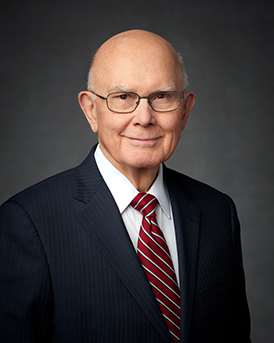
When Thou Art Converted (D. Todd Christofferson of the Presidency of the Seventy, April 2004 General Conference)

Source
How can you become converted? How can you make the gospel of Jesus Christ not just an influence in your life but the controlling influence and, indeed, the very core of what you are?
My comments are directed particularly to young people, although I hope they may be helpful to everyone.

Years ago when I served as a stake president, a man came to confess a transgression. His confession surprised me. He had been an active member of the Church for years. I wondered how a person with his experience could have committed the sin that he did. After some pondering, it came to me that this brother had never become truly converted. Despite his Church activity, the gospel had not penetrated his heart. It was only an external influence in his life. When he was in wholesome environments, he kept the commandments, but in a different environment, other influences might control his actions.

How can you become converted? How can you make the gospel of Jesus Christ not just an influence in your life but the controlling influence and, indeed, the very core of what you are? The ancient prophet Jeremiah spoke of the law of God, the gospel, being written in our hearts. He quotes the Lord speaking about us, His people in the latter days: “I will put my law in their inward parts, and write it in their hearts; and will be their God, and they shall be my people.” 1

Do you want this for yourself? I can tell you how that can happen, but it must be something you want. The gospel cannot be written in your heart unless your heart is open. Without a heartfelt desire, you can participate in sacrament meetings, classes, and Church activities and do the things I will tell you, but it won’t make much difference. But if your heart is open and willing, like the heart of a child, 2 let me tell you what you can do to be converted.

As a first step, you must lay aside any feeling of pride that is so common in the world today. By this I mean the attitude that rejects the authority of God to rule in our lives. This attitude was described by the Lord to Joseph Smith when He said, “They seek not the Lord to establish his righteousness, but every man walketh in his own way, and after the image of his own god.” 3 You hear it expressed today in phrases such as “Do your own thing” or “Right and wrong depend on what I feel is right for me.” That attitude is a rebellion against God, just as Lucifer rebelled against God in the premortal world. He rejected God’s right to declare the truth and establish the law. 4 Satan wanted, and still wants, the power to declare arbitrarily what is right and wrong. Our beloved Creator does not force us to accept His authority, but willingly submitting to that authority is the first step in conversion.

Further, for the gospel to be written in your heart, you need to know what it is and grow to understand it more fully. That means you will study it. 5 When I say “study,” I mean something more than reading. It is a good thing sometimes to read a book of scripture within a set period of time to get an overall sense of its message, but for conversion, you should care more about the amount of time you spend in the scriptures than about the amount you read in that time. I see you sometimes reading a few verses, stopping to ponder them, carefully reading the verses again, and as you think about what they mean, praying for understanding, asking questions in your mind, waiting for spiritual impressions, and writing down the impressions and insights that come so you can remember and learn more. Studying in this way, you may not read a lot of chapters or verses in a half hour, but you will be giving place in your heart for the word of God, and He will be speaking to you. Remember Alma’s description of what it feels like: “It beginneth to enlarge my soul; yea, it beginneth to enlighten my understanding, yea, it beginneth to be delicious to me.” 6 You will know that the gospel is being written in your heart, that your conversion is happening, as the word of the Lord from His prophets, past and present, feels more and more delicious to your soul.

I mentioned praying as you study to understand the scriptures, but your prayers must not be limited to that. In the Book of Mormon, Amulek tells us we should pray about everything in our lives. He says, “Pour out your souls [to God] in your closets, and your secret places, and in your wilderness.” 7 Your Heavenly Father wants you to pray about your hopes and fears, your friends and family, your school and work, and the needs of those around you. Most of all, you should pray to be filled with the love of Christ. This love is given to those who are true followers of Jesus Christ, who ask for it with all the energy of their heart. 8 This love is the fruit of the tree of life, 9 and tasting it is a major part of your conversion because once you have felt your Savior’s love for you, even the smallest part, you will feel secure, and a love for Him and for your Heavenly Father will grow within you. In your heart you will want to do what these holy beings ask of you. Go often to your closet, your secret place, your wilderness. Thank God for your blessings; ask for His help; ask Him to bestow upon you the pure love of Christ. Sometimes fasting will help.

After Amulek talked about prayer, he spoke about something else that is an important element of your conversion—serving others. Otherwise, he said, “your prayer is vain, and availeth you nothing.” 10 In other words, to be converted, you must not only open your heart to a knowledge of the gospel and the love of God, you must practice the gospel law. You cannot fully understand or appreciate it unless you personally apply it in your life. Jesus said that He came to serve, not to be served. 11 So it must be with you. You must look outward and care about others. You can be compassionate; you can be friendly; you can share; you can help others in a hundred small ways. As you do, the gospel of Jesus Christ will become a part of you.

Let me mention one other thing. In ancient times when people wanted to worship the Lord and seek His blessings, they often brought a gift. For example, when they went to the temple, they brought a sacrifice to place on the altar. After His Atonement and Resurrection, the Savior said He would no longer accept burnt offerings of animals. The gift or sacrifice He will accept now is “a broken heart and a contrite spirit.” 12 As you seek the blessing of conversion, you can offer the Lord the gift of your broken, or repentant, heart and your contrite, or obedient, spirit. In reality, it is the gift of yourself—what you are and what you are becoming.

Is there something in you or in your life that is impure or unworthy? When you get rid of it, that is a gift to the Savior. Is there a good habit or quality that is lacking in your life? When you adopt it and make it part of your character, you are giving a gift to the Lord. 13 Sometimes this is hard to do, but would your gifts of repentance and obedience be worthy gifts if they cost you nothing? 14 Don’t be afraid of the effort required. And remember, you don’t have to do it alone. Jesus Christ will help you make of yourself a worthy gift. His grace will make you clean, even holy. Eventually, you will become like Him, “perfect in Christ.” 15

With conversion, you will wear a protective armor, “the whole armour of God,” 16 and the words of Christ, which come by the Holy Spirit, “will tell you all things” you should do. 17

In 1992 two sister missionaries in Zagreb, Croatia, were returning to their apartment one evening. Their last teaching appointment had been some distance away, and it was getting dark. Several men on the trolley made crude comments and became rather menacing. Feeling threatened, the sisters got off the trolley at the next stop just as the doors closed so no one could follow them. Having avoided that problem, they realized they were in a place unknown to either of them. As they turned to look for help, they saw a woman. The missionaries explained that they were lost and asked the woman if she could direct them. She knew where they could find another trolley to take them home and invited them to follow her. On the way they had to pass a bar with patrons sitting along the sidewalk in the gathering darkness. These men also appeared threatening. Nevertheless, the two young women had the distinct impression that the men could not see them. They walked by, apparently invisible to those who might have had a mind to harm them. When the sisters and their guide reached the stop, the trolley they needed was just arriving. They turned to thank the woman, but she was nowhere to be seen. 18

These missionaries were furnished a guide and other blessings to protect them physically. As you become converted, you will have comparable protections to keep you from temptation and deliver you from evil. 19 Sometimes evil will not find you. Sometimes you will be protected when evil is made invisible to you. Even when you must confront it directly, you will do so with faith, not fear.

We have talked of desire, submissiveness to God, study, prayer, service, repentance, and obedience. From these, coupled with your worship and activity in Church, will come testimony and conversion. The gospel won’t be just an influence in your life—it will be what you are. Plead with God in the name of Christ to write the gospel in your mind that you may have understanding and in your heart that you may love to do His will. 20 Pursue this blessing diligently and patiently, and you will receive it, for God “is gracious and merciful, … and of great kindness.” 21 I so bear witness in the name of Jesus Christ, amen.

Notes:

 1.  Jer. 31:33. Ezekiel said conversion is like the Lord taking away our “stony heart” and giving us a heart that loves Him and His gospel (see Ezek. 11:19–20). Surely this is what happened to the people of King Benjamin when they said their hearts had been changed and they didn’t even want to do evil anymore “but to do good continually” (Mosiah 5:2).

 2. See Matt. 18:3–4.

 3.  D&C 1:16; see also Hel. 12:6.

 4. See D&C 76:25–29.

 5. We are exceptionally fortunate to have so much of the recorded word of God at our fingertips. In prior ages of the world’s history, very few people had copies of the scriptures in their possession. They had to try to remember what they could whenever they heard scriptures read in sermons. What an incomparable blessing that you can have your own copy to read whenever you want. You can see how the gospel works in the lives of people who were converted, from Adam’s time down to our own time.

 6.  Alma 32:28.

 7.  Alma 34:26.

 8. See Moro. 7:47–48.

 9. See 1 Ne. 11:21–23.

 10.  Alma 34:28.

 11. See Mark 10:45. Christ told Peter that when he was converted, he should strengthen his brethren (see Luke 22:32).

 12.  3 Ne. 9:20.

 13. Along with the scriptures, the pamphlet For the Strength of Youth (2001) can guide you.

 14. Once when King David prepared to offer a sacrifice to the Lord, a loyal subject said he would give the king the place, the animals, and the firewood to make the sacrifice. But David declined, saying, “I will surely buy it of thee at a price: neither will I offer burnt offerings unto the Lord my God of that which doth cost me nothing” (2 Sam. 24:24).

 15. See Moro. 10:32–33.

 16. See Eph. 6:13–17.

 17.  2 Ne. 32:3.

 18. As related by Sister Nicole Christofferson Miller.

 19. See Matt. 6:13.

 20. See Heb. 8:10; Heb. 10:16.

 21.  Joel 2:13. “Draw near unto me and I will draw near unto you; seek me diligently and ye shall find me; ask, and ye shall receive; knock, and it shall be opened unto you” (D&C 88:63).

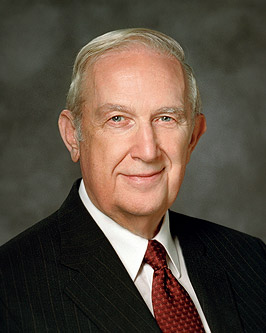
The Challenge to Become (Dallin H. Oaks of the Quorum of the Twelve Apostles, October 2000 General Conference)

Source
In contrast to the institutions of the world, which teach us to know something, the gospel of Jesus Christ challenges us to become something....  The Final Judgment is not just an evaluation of a sum total of good and evil acts—what we have done. It is an acknowledgment of the final effect of our acts and thoughts—what we have become. It is not enough for anyone just to go through the motions. The commandments, ordinances, and covenants of the gospel are not a list of deposits required to be made in some heavenly account. The gospel of Jesus Christ is a plan that shows us how to become what our Heavenly Father desires us to become.

The Apostle Paul taught that the Lord’s teachings and teachers were given that we may all attain “the measure of the stature of the fulness of Christ” (Eph. 4:13). This process requires far more than acquiring knowledge. It is not even enough for us to be convinced of the gospel; we must act and think so that we are converted by it. In contrast to the institutions of the world, which teach us to know something, the gospel of Jesus Christ challenges us to become something.

Many Bible and modern scriptures speak of a final judgment at which all persons will be rewarded according to their deeds or works or the desires of their hearts. But other scriptures enlarge upon this by referring to our being judged by the condition we have achieved.

The prophet Nephi describes the Final Judgment in terms of what we have become: “And if their works have been filthiness they must needs be filthy; and if they be filthy it must needs be that they cannot dwell in the kingdom of God” (1 Ne. 15:33; emphasis added). Moroni declares, “He that is filthy shall be filthy still; and he that is righteous shall be righteous still” (Morm. 9:14; emphasis added; see also Rev. 22:11–12; 2 Ne. 9:16; D&C 88:35). The same would be true of “selfish” or “disobedient” or any other personal attribute inconsistent with the requirements of God. Referring to the “state” of the wicked in the Final Judgment, Alma explains that if we are condemned by our words, our works, and our thoughts, “we shall not be found spotless; … and in this awful state we shall not dare to look up to our God” (Alma 12:14).

From such teachings we conclude that the Final Judgment is not just an evaluation of a sum total of good and evil acts—what we have done. It is an acknowledgment of the final effect of our acts and thoughts—what we have become. It is not enough for anyone just to go through the motions. The commandments, ordinances, and covenants of the gospel are not a list of deposits required to be made in some heavenly account. The gospel of Jesus Christ is a plan that shows us how to become what our Heavenly Father desires us to become.

A parable illustrates this understanding. A wealthy father knew that if he were to bestow his wealth upon a child who had not yet developed the needed wisdom and stature, the inheritance would probably be wasted. The father said to his child:

“All that I have I desire to give you—not only my wealth, but also my position and standing among men. That which I have I can easily give you, but that which I am you must obtain for yourself. You will qualify for your inheritance by learning what I have learned and by living as I have lived. I will give you the laws and principles by which I have acquired my wisdom and stature. Follow my example, mastering as I have mastered, and you will become as I am, and all that I have will be yours.”

This parable parallels the pattern of heaven. The gospel of Jesus Christ promises the incomparable inheritance of eternal life, the fulness of the Father, and reveals the laws and principles by which it can be obtained.

We qualify for eternal life through a process of conversion. As used here, this word of many meanings signifies not just a convincing but a profound change of nature. Jesus used this meaning when He taught His chief Apostle the difference between a testimony and a conversion. Jesus asked His disciples, “Whom do men say that I the Son of man am?” (Matt. 16:13). Next He asked, “But whom say ye that I am?

“And Simon Peter answered and said, Thou art the Christ, the Son of the living God.

“And Jesus answered and said unto him, Blessed art thou, Simon Bar-jona: for flesh and blood hath not revealed it unto thee, but my Father which is in heaven” (Matt. 16:15–17).

Peter had a testimony. He knew that Jesus was the Christ, the promised Messiah, and he declared it. To testify is to know and to declare.

Later on, Jesus taught these same men about conversion, which is far more than testimony. When the disciples asked who was the greatest in the kingdom of heaven, “Jesus called a little child unto him, and set him in the midst of them,

“And said, Verily I say unto you, Except ye be converted, and become as little children, ye shall not enter into the kingdom of heaven.

“Whosoever therefore shall humble himself as this little child, the same is greatest in the kingdom of heaven” (Matt. 18:2–4; emphasis added).

Later, the Savior confirmed the importance of being converted, even for those with a testimony of the truth. In the sublime instructions given at the Last Supper, He told Simon Peter, “I have prayed for thee, that thy faith fail not: and when thou art converted, strengthen thy brethren” (Luke 22:32).

In order to strengthen his brethren—to nourish and lead the flock of God—this man who had followed Jesus for three years, who had been given the authority of the holy apostleship, who had been a valiant teacher and testifier of the Christian gospel, and whose testimony had caused the Master to declare him blessed still had to be “converted.”

Jesus’ challenge shows that the conversion He required for those who would enter the kingdom of heaven (see Matt. 18:3) was far more than just being converted to testify to the truthfulness of the gospel. To testify is to know and to declare. The gospel challenges us to be “converted,” which requires us to do and to become. If any of us relies solely upon our knowledge and testimony of the gospel, we are in the same position as the blessed but still unfinished Apostles whom Jesus challenged to be “converted.” We all know someone who has a strong testimony but does not act upon it so as to be converted. For example, returned missionaries, are you still seeking to be converted, or are you caught up in the ways of the world?

The needed conversion by the gospel begins with the introductory experience the scriptures call being “born again” (e.g., Mosiah 27:25; Alma 5:49; John 3:7; 1 Pet. 1:23). In the waters of baptism and by receiving the gift of the Holy Ghost, we become the spiritual “sons and daughters” of Jesus Christ, “new creatures” who can “inherit the kingdom of God” (Mosiah 27:25–26).

In teaching the Nephites, the Savior referred to what they must become. He challenged them to repent and be baptized and be sanctified by the reception of the Holy Ghost, “that ye may stand spotless before me at the last day” (3 Ne. 27:20). He concluded: “Therefore, what manner of men ought ye to be? Verily I say unto you, even as I am” (3 Ne. 27:27).

The gospel of Jesus Christ is the plan by which we can become what children of God are supposed to become. This spotless and perfected state will result from a steady succession of covenants, ordinances, and actions, an accumulation of right choices, and from continuing repentance. “This life is the time for men to prepare to meet God” (Alma 34:32).

Now is the time for each of us to work toward our personal conversion, toward becoming what our Heavenly Father desires us to become. As we do so, we should remember that our family relationships—even more than our Church callings—are the setting in which the most important part of that development can occur. The conversion we must achieve requires us to be a good husband and father or a good wife and mother. Being a successful Church leader is not enough. Exaltation is an eternal family experience, and it is our mortal family experiences that are best suited to prepare us for it.

The Apostle John spoke of what we are challenged to become when he said: “Beloved, now are we the sons of God, and it doth not yet appear what we shall be: but we know that, when he shall appear, we shall be like him; for we shall see him as he is” (1 Jn. 3:2; see also Moro. 7:48).

I hope the importance of conversion and becoming will cause our local leaders to reduce their concentration on statistical measures of actions and to focus more on what our brothers and sisters are and what they are striving to become.

Our needed conversions are often achieved more readily by suffering and adversity than by comfort and tranquillity, as Elder Hales taught us so beautifully this morning. Father Lehi promised his son Jacob that God would “consecrate [his] afflictions for [his] gain” (2 Ne. 2:2). The Prophet Joseph was promised that “thine adversity and thine afflictions shall be but a small moment; and then, if thou endure it well, God shall exalt thee on high” (D&C 121:7–8).

Most of us experience some measure of what the scriptures call “the furnace of affliction” (Isa. 48:10; 1 Ne. 20:10). Some are submerged in service to a disadvantaged family member. Others suffer the death of a loved one or the loss or postponement of a righteous goal like marriage or childbearing. Still others struggle with personal impairments or with feelings of rejection, inadequacy, or depression. Through the justice and mercy of a loving Father in Heaven, the refinement and sanctification possible through such experiences can help us achieve what God desires us to become.

We are challenged to move through a process of conversion toward that status and condition called eternal life. This is achieved not just by doing what is right, but by doing it for the right reason—for the pure love of Christ. The Apostle Paul illustrated this in his famous teaching about the importance of charity (see 1 Cor. 13). The reason charity never fails and the reason charity is greater than even the most significant acts of goodness he cited is that charity, “the pure love of Christ” (Moro. 7:47), is not an act but a condition or state of being. Charity is attained through a succession of acts that result in a conversion. Charity is something one becomes. Thus, as Moroni declared, “except men shall have charity they cannot inherit” the place prepared for them in the mansions of the Father (Ether 12:34; emphasis added).

All of this helps us understand an important meaning of the parable of the laborers in the vineyard, which the Savior gave to explain what the kingdom of heaven is like. As you remember, the owner of the vineyard hired laborers at different times of the day. Some he sent into the vineyard early in the morning, others about the third hour, and others in the sixth and ninth hours. Finally, in the eleventh hour he sent others into the vineyard, promising that he would also pay them “whatsoever is right” (Matt. 20:7).

At the end of the day the owner of the vineyard gave the same wage to every worker, even to those who had come in the eleventh hour. When those who had worked the entire day saw this, “they murmured against the goodman of the house” (Matt. 20:11). The owner did not yield but merely pointed out that he had done no one any wrong, since he had paid each man the agreed amount.

Like other parables, this one can teach several different and valuable principles. For present purposes its lesson is that the Master’s reward in the Final Judgment will not be based on how long we have labored in the vineyard. We do not obtain our heavenly reward by punching a time clock. What is essential is that our labors in the workplace of the Lord have caused us to become something. For some of us, this requires a longer time than for others. What is important in the end is what we have become by our labors. Many who come in the eleventh hour have been refined and prepared by the Lord in ways other than formal employment in the vineyard. These workers are like the prepared dry mix to which it is only necessary to “add water”—the perfecting ordinance of baptism and the gift of the Holy Ghost. With that addition—even in the eleventh hour—these workers are in the same state of development and qualified to receive the same reward as those who have labored long in the vineyard.

This parable teaches us that we should never give up hope and loving associations with family members and friends whose fine qualities (see Moro. 7:5–14) evidence their progress toward what a loving Father would have them become. Similarly, the power of the Atonement and the principle of repentance show that we should never give up on loved ones who now seem to be making many wrong choices.

Instead of being judgmental about others, we should be concerned about ourselves. We must not give up hope. We must not stop striving. We are children of God, and it is possible for us to become what our Heavenly Father would have us become.

How can we measure our progress? The scriptures suggest various ways. I will mention only two.

After King Benjamin’s great sermon, many of his hearers cried out that the Spirit of the Lord “has wrought a mighty change in us, or in our hearts, that we have no more disposition to do evil, but to do good continually” (Mosiah 5:2). If we are losing our desire to do evil, we are progressing toward our heavenly goal.

The Apostle Paul said that persons who have received the Spirit of God “have the mind of Christ” (1 Cor. 2:16). I understand this to mean that persons who are proceeding toward the needed conversion are beginning to see things as our Heavenly Father and His Son, Jesus Christ, see them. They are hearing His voice instead of the voice of the world, and they are doing things in His way instead of by the ways of the world.

I testify of Jesus Christ, our Savior and our Redeemer, whose Church this is. I testify with gratitude of the plan of the Father under which, through the Resurrection and Atonement of our Savior, we have the assurance of immortality and the opportunity to become what is necessary for eternal life. In the name of Jesus Christ, amen.

Tuesday, February 25, 2014

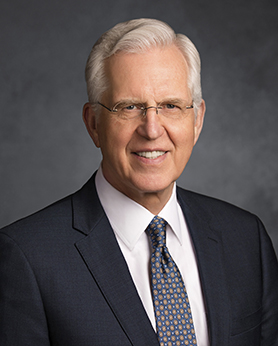
Converted unto the Lord (David A. Bednar of the Quorum of the Twelve Apostles, October 2012 General Conference)

Source
Testimony is the beginning of and a prerequisite to continuing conversion.... Testimony alone is not and will not be enough to protect us in the latter-day storm of darkness and evil in which we are living.... Knowing that the gospel is true is the essence of a testimony. Consistently being true to the gospel is the essence of conversion. We should know the gospel is true and be true to the gospel.

My message focuses upon the relationship between receiving a testimony that Jesus is the Christ and becoming converted to Him and His gospel. Typically, we treat the topics of testimony and conversion separately and independently. However, we gain precious perspective and greater spiritual conviction as we consider these two important subjects together.

I pray the Holy Ghost will instruct and edify each of us.

Whom Say Ye That I Am?
We can learn much about testimony and conversion from the ministry of the Apostle Peter.

As Jesus came into the coasts of Caesarea Philippi, He posed this penetrating question to His disciples: “Whom say ye that I am?”

Peter responded forthrightly:

“Thou art the Christ, the Son of the living God.

“And Jesus answered and said unto him, Blessed art thou, Simon Bar-jona: for flesh and blood hath not revealed it unto thee, but my Father which is in heaven” (Matthew 16:15–17).

As is evidenced in Peter’s reply and the Savior’s instruction, a testimony is personal knowledge of spiritual truth obtained by revelation. A testimony is a gift from God and is available to all of His children. Any honest seeker of truth can obtain a testimony by exercising the necessary “particle of faith” in Jesus Christ to “experiment upon” (Alma 32:27) and “try the virtue of the word” (Alma 31:5), to yield “to the enticings of the Holy Spirit” (Mosiah 3:19), and to awaken unto God (see Alma 5:7). Testimony brings increased personal accountability and is a source of purpose, assurance, and joy.

Seeking for and obtaining a testimony of spiritual truth requires asking, seeking, and knocking (see Matthew 7:7; 3 Nephi 14:7) with a sincere heart, real intent, and faith in the Savior (see Moroni 10:4). Fundamental components of a testimony are knowing that Heavenly Father lives and loves us, that Jesus Christ is our Savior, and that the fulness of the gospel has been restored to the earth in these latter days.

When Thou Art Converted
As the Savior taught His disciples at the Last Supper, He said to Peter:

“Simon, Simon, behold, Satan hath desired to … sift you as wheat:

“But I have prayed for thee, that thy faith fail not: and when thou art converted, strengthen thy brethren” (Luke 22:31–32).

Interestingly, this mighty Apostle had talked and walked with the Master, had witnessed many miracles, and had a strong testimony of the Savior’s divinity. Yet even Peter needed additional instruction from Jesus about the converting and sanctifying power of the Holy Ghost and his obligation to serve faithfully.

The essence of the gospel of Jesus Christ entails a fundamental and permanent change in our very nature made possible through the Savior’s Atonement. True conversion brings a change in one’s beliefs, heart, and life to accept and conform to the will of God (see Acts 3:19; 3 Nephi 9:20) and includes a conscious commitment to become a disciple of Christ.

Conversion is an enlarging, a deepening, and a broadening of the undergirding base of testimony. It is the result of revelation from God, accompanied by individual repentance, obedience, and diligence. Any honest seeker of truth can become converted by experiencing the mighty change of heart and being spiritually born of God (see Alma 5:12–14). As we honor the ordinances and covenants of salvation and exaltation (see D&C 20:25), “press forward with a steadfastness in Christ” (2 Nephi 31:20), and endure in faith to the end (see D&C 14:7), we become new creatures in Christ (see 2 Corinthians 5:17). Conversion is an offering of self, of love, and of loyalty we give to God in gratitude for the gift of testimony.

Book of Mormon Examples of Conversion
The Book of Mormon is filled with inspiring accounts of conversion. Amaleki, a descendant of Jacob, declared: “I would that ye should come unto Christ, who is the Holy One of Israel, and partake of his salvation, and the power of his redemption. Yea, come unto him, and offer your whole souls as an offering unto him” (Omni 1:26).

Knowing by the power of the Holy Ghost that Jesus is the Christ is important and necessary. But earnestly coming unto Him and giving our whole souls as an offering requires much more than merely knowing. Conversion requires all of our heart, all of our might, and all of our mind and strength (see D&C 4:2).

King Benjamin’s people responded to his teaching by exclaiming, “Yea, we believe all the words which thou hast spoken unto us; and also, we know of their surety and truth, because of the Spirit of the Lord Omnipotent, which has wrought a mighty change in us, or in our hearts, that we have no more disposition to do evil, but to do good continually” (Mosiah 5:2). Accepting the words spoken, gaining a testimony of their truthfulness, and exercising faith in Christ produced a mighty change of heart and a firm determination to improve and become better.

Converted Lamanites in the book of Helaman are described as being “in the path of their duty, and they do walk circumspectly before God, and they do observe to keep his commandments and his statutes and his judgments. …

“… And they are striving with unwearied diligence that they may bring the remainder of their brethren to the knowledge of the truth” (Helaman 15:5–6).

As these examples highlight, the key characteristics associated with conversion are experiencing a mighty change in our hearts, having a disposition to do good continually, going forward in the path of duty, walking circumspectly before God, keeping the commandments, and serving with unwearied diligence. Clearly, these faithful souls had become deeply devoted to the Lord and His teachings.

Becoming Converted
For many of us, conversion is an ongoing process and not a onetime event that results from a powerful or dramatic experience. Line upon line and precept upon precept, gradually and almost imperceptibly, our motives, our thoughts, our words, and our deeds become aligned with the will of God. Conversion unto the Lord requires both persistence and patience.

Samuel the Lamanite identified five basic elements in becoming converted unto the Lord: (1) believing in the teachings and prophecies of the holy prophets as they are recorded in the scriptures, (2) exercising faith in the Lord Jesus Christ, (3) repenting, (4) experiencing a mighty change of heart, and (5) becoming “firm and steadfast in the faith” (see Helaman 15:7–8). This is the pattern that leads to conversion.

Testimony and Conversion
Testimony is the beginning of and a prerequisite to continuing conversion. Testimony is a point of departure; it is not an ultimate destination. Strong testimony is the foundation upon which conversion is established.

Testimony alone is not and will not be enough to protect us in the latter-day storm of darkness and evil in which we are living. Testimony is important and necessary but not sufficient to provide the spiritual strength and protection we need. Some members of the Church with testimonies have wavered and fallen away. Their spiritual knowledge and commitment did not measure up to the challenges they faced.

An important lesson about the connection between testimony and conversion is evident in the missionary labors of the sons of Mosiah.

“As many as were brought to the knowledge of the truth, through the preaching of Ammon and his brethren, according to the spirit of revelation and of prophecy, and the power of God working miracles in them—yea, … as the Lord liveth, as many of the Lamanites as believed in their preaching, and were converted unto the Lord, never did fall away.

“For they became a righteous people; they did lay down the weapons of their rebellion, that they did not fight against God any more. …

“Now, these are they who were converted unto the Lord” (Alma 23:6–8).

Two major elements are described in these verses: (1) the knowledge of the truth, which may be interpreted as a testimony, and (2) converted unto the Lord, which I understand to be conversion to the Savior and His gospel. Thus, the powerful combination of both testimony and conversion unto the Lord produced firmness and steadfastness and provided spiritual protection.

They never did fall away and surrendered “the weapons of their rebellion, that they did not fight against God any more.” To set aside cherished “weapons of rebellion” such as selfishness, pride, and disobedience requires more than merely believing and knowing. Conviction, humility, repentance, and submissiveness precede the abandonment of our weapons of rebellion. Do you and I still possess weapons of rebellion that keep us from becoming converted unto the Lord? If so, then we need to repent now.

Note that the Lamanites were not converted to the missionaries who taught them or to the excellent programs of the Church. They were not converted to the personalities of their leaders or to preserving a cultural heritage or the traditions of their fathers. They were converted unto the Lord—to Him as the Savior and to His divinity and doctrine—and they never did fall away.

A testimony is spiritual knowledge of truth obtained by the power of the Holy Ghost. Continuing conversion is constant devotion to the revealed truth we have received—with a heart that is willing and for righteous reasons. Knowing that the gospel is true is the essence of a testimony. Consistently being true to the gospel is the essence of conversion. We should know the gospel is true and be true to the gospel.

Testimony, Conversion, and the Parable of the Ten Virgins
I now want to use one of many possible interpretations of the parable of the ten virgins to highlight the relationship between testimony and conversion. Ten virgins, five who were wise and five who were foolish, took their lamps and went to meet the bridegroom. Please think of the lamps used by the virgins as the lamps of testimony. The foolish virgins took their lamps of testimony but took no oil with them. Consider the oil to be the oil of conversion.

“But the wise took oil [of conversion] in their vessels with their lamps [of testimony].

“While the bridegroom tarried, they all slumbered and slept.

“And at midnight there was a cry made, Behold, the bridegroom cometh; go ye out to meet him.

“Then all those virgins arose, and trimmed their lamps [of testimony].

“And the foolish said unto the wise, Give us of your oil [even the oil of conversion]; for our lamps [of testimony are weak and] are gone out.

“But the wise answered, saying, Not so; lest there be not enough for us and you: but go ye rather to them that sell, and buy for yourselves” (Matthew 25:4–9).

Were the five wise virgins selfish and unwilling to share, or were they indicating correctly that the oil of conversion cannot be borrowed? Can the spiritual strength that results from consistent obedience to the commandments be given to another person? Can the knowledge obtained through diligent study and pondering of the scriptures be conveyed to one who is in need? Can the peace the gospel brings to a faithful Latter-day Saint be transferred to an individual experiencing adversity or great challenge? The clear answer to each of these questions is no.

As the wise virgins emphasized properly, each of us must “buy for ourselves.” These inspired women were not describing a business transaction; rather, they were emphasizing our individual responsibility to keep our lamp of testimony burning and to obtain an ample supply of the oil of conversion. This precious oil is acquired one drop at a time—“line upon line [and] precept upon precept” (2 Nephi 28:30), patiently and persistently. No shortcut is available; no last-minute flurry of preparation is possible.

“Wherefore, be faithful, praying always, having your lamps trimmed and burning, and oil with you, that you may be ready at the coming of the Bridegroom” (D&C 33:17).

Testimony
I promise that as we come to a knowledge of the truth and are converted unto the Lord, we will remain firm and steadfast and never fall away. Eagerly we will set aside our weapons of rebellion. We will be blessed with bright light from our lamps of testimony and an ample supply of the oil of conversion. And as each of us becomes more fully converted, we will strengthen our families, our friends, and our associates. Of these truths I testify in the sacred name of the Lord Jesus Christ, amen.

Monday, February 24, 2014

Pure Testimony (M. Russell Ballard off the Quorum of the Twelve Apostles, October 2004 General Conference)

Source
Simply stated, testimony—real testimony, born of the Spirit and confirmed by the Holy Ghost—changes lives. It changes how you think and what you do. It changes what you say. It affects every priority you set and every choice you make.


I recently returned from an assignment in Asia where we met with faithful Saints and missionaries. One meeting was in a metropolitan area where we have approximately 14,000 Church members living within a population of nearly 21 million people. If that same ratio were applied to this meeting, in the Conference Center we would have only 13 members of the Church scattered among this congregation of over 20,000.

This experience impressed upon me how deeply grateful we must all be to know that after ages of darkness and apostasy, Joseph Smith beheld a remarkable vision of the Father and the Son in the Sacred Grove. Clearly, in our world today it is a rare and precious thing to have a testimony that God our Heavenly Father lives; that His Son, Jesus Christ, is our Savior and Redeemer; and that priesthood authority to administer the gospel of Jesus Christ has been restored once again upon the earth. The profound blessing of having a testimony of these truths cannot be measured or ever taken for granted.

Personal testimony is the foundation of our faith. It is the binding power that makes The Church of Jesus Christ of Latter-day Saints unique in the lives of its members, as compared with all other religious denominations of the world. The doctrine of the Restoration is glorious in and of itself, but the thing that makes it powerful and imbues it with great meaning is the personal testimonies of Church members worldwide who accept the Restoration of the gospel and strive to live its teachings every day of their lives.

A testimony is a witness or confirmation of eternal truth impressed upon individual hearts and souls through the Holy Ghost, whose primary ministry is to testify of truth, particularly as it relates to the Father and the Son. When one receives a testimony of truth through this divinely appointed process, it immediately begins to have impact on that person’s life. According to Alma the Younger, “it will begin to swell within your breasts; and when you feel these swelling motions, ye will begin to say within yourselves … the word is good, for it beginneth to enlarge my soul; yea, it beginneth to enlighten my understanding, yea, it beginneth to be delicious to me” (Alma 32:28).

Simply stated, testimony—real testimony, born of the Spirit and confirmed by the Holy Ghost—changes lives. It changes how you think and what you do. It changes what you say. It affects every priority you set and every choice you make. To have a real and abiding testimony of the gospel of Jesus Christ is to be “spiritually … born of God,” to “[receive] his image in your countenances,” and to experience a “mighty change in your hearts” (Alma 5:14).

Like almost everything else in life, testimonies grow and develop through experience and service. We often hear some members, and especially children, bear their testimonies, listing things for which they are thankful: their love of family, the Church, their teachers, their friends. For them, the gospel is something that they are grateful for because it makes them feel happy and secure. This is a good beginning, but testimonies need to be much more. They need to be anchored very early to the first principles of the gospel.

A testimony of the reality of Heavenly Father’s love, of the life and ministry of Jesus Christ, and of the effect of His Atonement on every son and daughter of God brings about the desire to repent and live worthy of the companionship of the Holy Ghost. It also brings a confirmation to our soul of the Restoration of the gospel in these latter days. Real testimony of these precious truths comes as a witness by the Holy Ghost after sincere and dedicated effort, including teaching in the home, prayer, scripture study, service to others, and diligent obedience to Heavenly Father’s commandments. To gain and forever hold on to a testimony of gospel truths is worth whatever price in spiritual preparation we may be required to pay.

My experience throughout the Church leads me to worry that too many of our members’ testimonies linger on “I am thankful” and “I love,” and too few are able to say with humble but sincere clarity, “I know.” As a result, our meetings sometimes lack the testimony-rich, spiritual underpinnings that stir the soul and have meaningful, positive impact on the lives of all those who hear them.

Our testimony meetings need to be more centered on the Savior, the doctrines of the gospel, the blessings of the Restoration, and the teachings of the scriptures. We need to replace stories, travelogues, and lectures with pure testimonies. Those who are entrusted to speak and teach in our meetings need to do so with doctrinal power that will be both heard and felt, lifting the spirits and edifying our people. You will remember at the heart of King Benjamin’s powerful sermon to his people was his personal witness of the Savior, who at that time had yet to be born into mortality.

At one point in the king’s sermon, when he had just borne witness to the people, “The Spirit of the Lord came upon them, and they were filled with joy … because of the exceeding faith which they had in Jesus Christ who should come” (Mosiah 4:3).

And that is because the Spirit cannot be restrained when pure testimony of Christ is borne. Thus, King Benjamin’s people were so inspired by his testimony that their lives were changed right there, on the spot; and they became as new people.

Remember also Abinadi and Alma. Abinadi infuriated wicked King Noah with his courageous testimony of the Lord Jesus Christ. Eventually this great missionary offered the ultimate sacrifice for his witness and faith but not before his pure testimony touched one believing heart. Alma, one of King Noah’s priests, “repented of his sins … , [accepted Jesus as the Christ,] and went about privately among the people, and began to teach the words of Abinadi” (Mosiah 18:1). Many were converted to the gospel of Jesus Christ as a direct result of Abinadi’s powerfully borne testimony of the Savior, believed by one soul, Alma.

The Apostle Paul also bore fervent testimony of Christ and converted many through his missionary labors. He did not shrink in bearing his testimony before King Agrippa. So mighty were his words that even this influential representative of the Roman Empire was moved to exclaim, “Almost thou persuadest me to be a Christian” (Acts 26:28).

The lesson, I believe, is clear: having a testimony alone is not enough. In fact, when we are truly converted, we cannot be restrained from testifying. And as it was with Apostles and faithful members of old, so is it also our privilege, our duty, and our solemn obligation to “declare the things which [we] know to be true” (D&C 80:4).

Again, please keep in mind that we are talking about sharing real testimony, not just speaking generally about the things we are thankful for. While it is always good to express love and gratitude, such expressions do not constitute the kind of testimony that will ignite a fire of belief in the lives of others. To bear testimony is “to bear witness by the power of the Holy Ghost; to make a solemn declaration of truth based on personal knowledge or belief” (Guide to the Scriptures, “Testify,” 241). Clear declaration of truth makes a difference in people’s lives. That is what changes hearts. That is what the Holy Ghost can confirm in the hearts of God’s children.

Although we can have testimonies of many things as members of the Church, there are basic truths we need to constantly teach one another and share with those not of our faith. Testify God is our Father and Jesus is the Christ. The plan of salvation is centered on the Savior’s Atonement. Joseph Smith restored the fulness of the everlasting gospel of Jesus Christ, and the Book of Mormon is evidence that our testimony is true.

Miraculous things happen when members join with missionaries and share pure testimony with those who are not members of the Church. For example, while many people were touched by Alma’s testimony in the land of Ammonihah, when Amulek stood and added his testimony to Alma’s, “the people began to be astonished, seeing there was more than one witness who testified” (Alma 10:12). The same thing can happen with us today. As we stand together the Lord will help us find many more of His sheep who will know His voice as we unitedly share our testimonies with them.

Many years ago Brigham Young told of an early missionary in the Church who was asked to share his testimony with a large group of people. According to President Young, this particular elder “never had been able to say that he knew Joseph [Smith] was a Prophet.” He would have preferred to just say a prayer and leave, but the circumstances made that impossible. So he started to speak, and “as soon as he got ‘Joseph’ out, ‘is a Prophet,’ was … next; and from that, his tongue was loosened, and he continued talking until near sun-down.”

President Young used this experience to teach that “the Lord pours out His Spirit upon a man, when he testifies that [which] the Lord gives him to testify of” (Millennial Star, supplement, 1853, 30).

The Prophet’s brother Hyrum understood this and testified fearlessly of divine truth as it had been revealed to his brother Joseph and confirmed in his own heart. His testimony blessed the lives of many, including Parley P. Pratt. When Parley first encountered the Book of Mormon, Hyrum took him into his own home and spent the night teaching and testifying to him. He bore witness of the prophetic mantle that rested upon Joseph and of the truthfulness of the Book of Mormon. Shortly thereafter Hyrum set aside his own needs and went with Parley to honor his request for baptism (see Autobiography of Parley Parker Pratt, ed. Parley P. Pratt Jr. [1938], 35–42).

We may never fully comprehend or be able to measure the far-reaching effects of Hyrum’s one-on-one testimony to Parley P. Pratt. In addition to Parley’s faithful posterity, his apostolic witness and missionary service drew countless souls into the kingdom of God. Interestingly, included among those who joined the Church as a direct result of his ministry in Canada were Joseph Fielding and his sisters, Mary and Mercy. After his first wife, Jerusha, died, Hyrum met and married Mary Fielding, and from their marriage came President Joseph F. Smith and countless other members and Church leaders. Now I realize that not all testimonies will return such a blessing as Hyrum’s did.

Joseph Kimber, a humble new convert in Thatcham, England, bore his simple testimony to a fellow farmhand. I believe Brother Kimber’s witness of Joseph Smith and the Restoration is what ignited the fire of belief in 17-year-old Henry Ballard’s heart and caused him to ask to be baptized. Generations of the Ballard family are the beneficiaries of that humble testimony.

Members and missionaries in our day can have the experience of converting others by living our lives as best we can and being prepared “to stand as witnesses of God at all times and in all things, and in all places” (Mosiah 18:9). A friend recently told me about being on a 90-minute bus ride in Brazil. He felt impressed to go to the back of the bus to speak to the young people who had been serving as guides for his group of businessmen. An associate of his father followed him to the back of the bus and heard his testimony of the truthfulness of the restored gospel. This man later said, “When I heard your testimony, I had the distinct feeling go through my whole body that these things were true.” He and his wife will soon be baptized.

The missionaries are now preparing to teach the lessons, not as memorized dialogue or a rote presentation; but rather, they will outline gospel principles in an organized way, calling upon the Spirit to direct how they communicate gospel truth to investigators, spirit to spirit and heart to heart. Brothers and sisters, join together with the missionaries in sharing your precious testimony every day, witnessing at every opportunity the glorious message of the Restoration. The fire of your testimony is all that you need in order to introduce the gospel to many more of our Father’s children. Trust in the Lord, and never underestimate the impact your testimony can have upon the lives of others as you bear it with the power of the Spirit. Doubt and fear are tools of Satan. The time has come for all of us to overcome any fear and boldly take every opportunity to share our testimonies of the gospel.

May the Lord bless you as you continue to nurture your testimonies through your prayers, your personal gospel study, and your acts of service. With great joy I humbly testify our Heavenly Father loves us, Jesus is the Christ, Joseph Smith restored the fulness of the everlasting gospel, and the Book of Mormon testifies of these truths. We are led by a living prophet today. And I pray that the Lord may bless you, my dear brothers and sisters, as you teach and testify, which I ask in the name of Jesus Christ, amen.

The Transforming Power of Faith and Character (Richard G. Scott of the Quorum of the Twelve Apostles, October 2010 General Conference)

Source
A consistent, righteous life produces an inner power and strength that can be permanently resistant to the eroding influence of sin and transgression.

When faith is properly understood and used, it has dramatically far-reaching effects. Such faith can transform an individual’s life from maudlin, common everyday activities to a symphony of joy and happiness. The exercise of faith is vital to Father in Heaven’s plan of happiness. But true faith, faith unto salvation, is centered on the Lord Jesus Christ, faith in His doctrines and teachings, faith in the prophetic guidance of the Lord’s anointed, faith in the capacity to discover hidden characteristics and traits that can transform life. Truly, faith in the Savior is a principle of action and power.

Faith is a foundation building block of creation. I am confident that the Savior Jesus Christ uses faith in His capacity to act under the direction of Father in Heaven. The Master used it to create the most remote galaxies as well as to compose quarks, the smallest elements of matter we know of today. Yet, I have faith that there are yet smaller building blocks in the wonder of creation.

Faith in the future is demonstrated by a couple sealed in the temple. They understand that by obedience to the teachings of Jesus Christ and the plan of happiness of our Father in Heaven, they can have a joyous life together. They recognize that when the challenges intended to be growth opportunities come, they will find ways, as prompted by the Holy Ghost, to overcome them in ways that are productive and character building.

Faith and character are intimately related. Faith in the power of obedience to the commandments of God will forge strength of character available to you in times of urgent need. Such character is not developed in moments of great challenge or temptation. That is when it is intended to be used. Your exercise of faith in true principles builds character; fortified character expands your capacity to exercise more faith. As a result, your capacity and confidence to conquer the trials of life is enhanced. The more your character is fortified, the more enabled you are to benefit from exercising the power of faith. You will discover how faith and character interact to strengthen one another. Character is woven patiently from threads of applied principle, doctrine, and obedience.

President Hugh B. Brown said: “Wherever in life great spiritual values await man’s appropriation, only faith can appropriate them. Man cannot live without faith, because in life’s adventure the central problem is character-building—which is not a product of logic, but of faith in ideals and sacrificial devotion to them” (in Conference Report, Oct. 1969, 105). We exercise faith by doing. Joseph Smith said that “faith [is] the principle of action and of power” (Lectures on Faith [1985], 72).

We become what we want to be by consistently being what we want to become each day. Righteous character is a precious manifestation of what you are becoming. Righteous character is more valuable than any material object you own, any knowledge you have gained through study, or any goals you have attained no matter how well lauded by mankind. In the next life your righteous character will be evaluated to assess how well you used the privilege of mortality.

Neither Satan nor any other power can destroy or undermine your growing character. Only you could do that through disobedience. A sterling character is converted into worthless ashes when eroded by deceit or transgression.

Strong moral character results from consistent correct choices in the trials and testing of life. Such choices are made with trust in things that are believed and when acted upon are confirmed.

What are some of the empowering principles upon which faith is based?

• Trust in God and in His willingness to provide help when needed, no matter how challenging the circumstance.
• Obedience to His commandments and a life that demonstrates that He can trust you.
• Sensitivity to the quiet promptings of the Holy Spirit.
• Courageous implementation of that prompting.
• Patience and understanding when God lets you struggle to grow and when answers come a piece at a time over an extended period.

“Faith is things which are hoped for and not seen; wherefore, dispute not because ye see not, for ye receive no witness until after the trial of your faith” (Ether 12:6). Thus, every time you try your faith—that is, act in worthiness on an impression—you will receive the confirming evidence of the Spirit. As you walk to the boundary of your understanding into the twilight of uncertainty, exercising faith, you will be led to find solutions you would not obtain otherwise. With even your strongest faith, God will not always reward you immediately according to your desires. Rather, God will respond with what in His eternal plan is best for you, when it will yield the greatest advantage. Be thankful that sometimes God lets you struggle for a long time before that answer comes. That causes your faith to increase and your character to grow.

The bedrock of character is integrity. Worthy character will strengthen your capacity to recognize the direction of the Spirit and to be obedient to it. Your consistent exercise of faith builds strong character. A secure foundation for your growing character is laid by making Jesus Christ and His teachings the center of your life.

Your happiness on earth as well as your eternal salvation require many correct decisions, none of which is difficult to make. Together those decisions forge a character resistant to the eroding influences of sin and transgression. Noble character is like a treasured porcelain made of select raw materials, formed with faith, carefully crafted by consistent righteous acts, and fired in the furnace of uplifting experience. It is an object of great beauty and priceless worth. Yet it can be damaged in a moment through transgression, requiring painful, prolonged effort to be rebuilt. When protected by self-control, righteous character will endure for eternity.

Material things do not of themselves produce happiness and satisfaction and the joy of attainment on earth. Nor do they lead us to exaltation. It is nobility of character, that fabric of inner strength and conviction woven from countless righteous decisions, that gives life its direction. A consistent, righteous life produces an inner power and strength that can be permanently resistant to the eroding influence of sin and transgression. Your faith in Jesus Christ and obedience to His commandments will strengthen your character. Your character is a measure of what you are becoming. It is the evidence of how well you are using your time on earth in this period of mortal probation.

An axiom we all understand is that you get what you pay for. That is true for spiritual matters as well. You get what you pay for in obedience, in faith in Jesus Christ, in diligent application of the truths you learn. What you get is the molding of character, the growth in capacity, and the successful completion of your mortal purpose to be proven and to have joy.

You cannot be passive in life, or in time the natural man will undermine your efforts to live worthily. You become what you do and what you think about. Lack of character leads one under pressure to satisfy appetite or seek personal gain. You cannot successfully bolster a weak character with the cloak of pretense.

In time one who makes decisions based upon circumstance is virtually assured to commit serious transgressions. There is no iron rod of truth to keep that person in the right way. He or she will continually be faced with many subtle temptations to make deviations from the commandments. Those choices are justified by arguing that they are not that bad, that they are more socially acceptable and provide a broader base of friends. A clever individual without foundation principles can at times acquire, temporarily, impressive accomplishments. Yet that attainment is like a sand castle. When the test of character comes, it crumbles, often taking others with it. Despite how carefully a transgressor seeks to keep the violation of commandments hidden, in time they nearly always become publicly known. Satan himself sees to that. He and his minions are determined to cause the greatest possible harm to each of Father in Heaven’s children. One serious act of disobedience or violation of trust invariably raises questions of whether or not there are others. The faith and confidence of others in that individual’s character is undermined.

This mortal life is a proving ground. How well you meet its challenges determines how strong your character will be. Your faith in Jesus Christ and His teachings fortifies your character.

I have personally verified that concepts like faith, prayer, love, and humility hold no great significance and produce no miracles until they become a living part of us through our own experience, aided by the sweet prompting of the Holy Spirit. In early life I found that I could learn gospel teachings intellectually and, through the power of reason and analysis, recognize that they were of significant value. But their enormous power and ability to stretch me beyond the limits of my imagination and capacity did not become reality until patient, consistent practice allowed the Holy Spirit to distill and expand their meaning in my heart. I found that while I was sincerely serving others, God forged my personal character. He engendered a growing capacity to recognize the direction of the Spirit. The genius of the gospel plan is that by doing those things the Lord counsels us to do, we are given every understanding and every capacity necessary to provide peace and rich fulfillment in this life. Likewise, we gain the preparation necessary for eternal happiness in the presence of the Lord.

A testimony is fortified by spiritual impressions that confirm the validity of a teaching, of a righteous act. Often such guidance is accompanied by powerful emotions that bring tears to the eyes and make it difficult to speak. But a testimony is not emotion. It is the very essence of character woven from threads born of countless correct decisions. These choices are made with trusting faith in things that are believed and, at least initially, are not seen. A strong testimony gives peace, comfort, and assurance. It generates the conviction that as the teachings of the Savior are consistently obeyed, life will be beautiful, the future will be secure, and there will be capacity to overcome the challenges that cross our path. A testimony grows from understanding truth distilled from prayer and the pondering of scriptural doctrine. It is nurtured by living those truths with faith anchored in the secure confidence that the promised results will be obtained.

Your testimony will be made strong through willing obedience to the law of tithing and by giving fast offerings, and the Lord will bless you richly for it. As your testimony is fortified, Satan will try harder to tempt you. Resist his efforts. You will become stronger and his influence on you weaker.

Satan’s increasing influence in the world is allowed to provide an atmosphere in which to prove ourselves. While he causes havoc today, Satan’s final destiny was fixed by Jesus Christ through His Atonement and the Resurrection. The devil will not triumph. Even now he must operate within the bounds set by the Lord. He cannot take away any blessing that has been earned. He cannot alter character that has been woven from righteous decisions. He has no power to destroy the eternal bonds forged in a holy temple between a husband, wife, and children. He cannot quench true faith. He cannot take away your testimony. Yes, these things can be lost by succumbing to his temptations. But he has no power in and of himself to destroy them.

To summarize:

• God uses your faith to mold your character.
• Character is the manifestation of what you are becoming.
• Strong character results from consistent correct choices.
• The bedrock of character is integrity.
• The more your character is fortified, the more enabled you are to exercise the power of faith.

Humility is that quality that permits us to be taught from on high through the Spirit or to be taught from sources whose origin was inspiration from the Lord, such as the scriptures and the comments of the prophets. Humility is the precious fertile soil of righteous character. In it the seeds of personal growth germinate. When cultivated through the exercise of faith, pruned by repentance, and fortified by obedience and good works, such seeds produce the cherished fruit of spiritual direction. Divine inspiration and power then result—inspiration to know the will of the Lord, power to provide the ability to accomplish that inspired will.

May I share four principles which have brought the deepest feelings of peace and happiness into my own life? The Lord has established these cornerstones in His eternal plan, and each one is essential. All work together in harmony and reinforce one another. When they are applied with diligence and consistency, they produce strength of character, increasing ability to convert the challenges of life into stepping-stones of happiness now and forever. They are:

• Faith in the Lord Jesus Christ and His program to acquire the power to achieve.
• Repentance to rectify the consequences of mistakes of omission or commission.
• Obedience to the commandments of the Lord to provide strength and direction in our lives.
• Selfless service to enrich the lives of others.

If you have determined to live righteously, don’t become discouraged. Life may seem difficult now, but hold on tightly to that iron rod of truth. You are making better progress than you realize. Your struggles are defining character, discipline, and confidence in the promises of your Father in Heaven and the Savior as you consistently obey Their commandments. May the Holy Ghost prompt you to always make decisions that fortify your character and yield much joy and happiness. In the name of Jesus Christ, amen.