Showing posts with label Resurrection (T). Show all posts

Wednesday, February 26, 2014

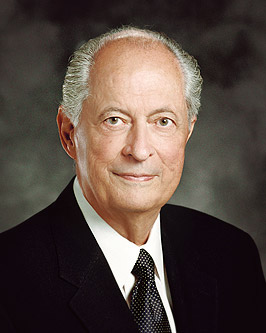
Faith through Tribulation Brings Peace and Joy (Robert D. Hales of the Quorum of the Twelve Apostles, April 2003 General Conference)

Source
Each of us must go through certain experiences to become more like our Savior....  tests of our faith are priceless opportunities to discover how deeply the Master cares about the welfare of our souls.... however dark conditions may seem in this world today, whatever the storms we are facing personally... joy can be ours now..... The One who had power to calm the elements of earth has power to calm our souls, to give us refuge from the storm.

After teaching the multitude, Jesus and His disciples set sail for the eastern shore of the Sea of Galilee. It was night and the Savior rested comfortably near the stern, asleep on a pillow. In time “there arose a great storm of wind, and the waves beat into the ship.” Terrified, the disciples awakened Him: “Master, carest thou not that we perish?” 1 His answer was characteristically calm: “Why are ye fearful, O ye of little faith?” 2 “And he arose, and rebuked the wind, and said unto the sea, Peace, be still. And the wind ceased, and there was a great calm.” 3

He who had created the earth was again commanding the elements. 4 In wonderment, His disciples asked, “What manner of man is this, that even the wind and the sea obey him?” 5

We are living through turbulent times. A great storm of evil has come upon the earth. The winds of wickedness howl about us; the waves of war beat against our ship. As Paul wrote to Timothy: “In the last days perilous times shall come. For men shall be lovers of their own selves, covetous, boasters, proud, blasphemers, disobedient to parents, unthankful, unholy, … Having a form of godliness; but denying the power thereof.” 6

It is true that ominous clouds gather around us, but just as the Savior’s words brought peace to the Apostles in the boat, they bring peace to us today: “And when ye shall hear of wars and rumours of wars, be ye not troubled: for such things must needs be; but the end shall not be yet.” 7 “If ye are prepared ye shall not fear.” 8

To Elijah, Jehovah said, “Go forth, and stand upon the mount before the Lord.” Elijah obeyed, and after a storm of wind and earthquakes and fire, he was finally visited with “a still small voice.” To Elijah, who had hid himself inside a cave, the Lord asked, “What doest thou here, Elijah?” And Elijah answered, “Because the children of Israel have forsaken thy covenant, thrown down thine altars, and slain thy prophets with the sword; and I, even I only, am left; and they seek my life, to take it away.” But the Lord had important work for Elijah to do, and therefore “said unto him, Go, return on thy way.” 9 So Elijah went.

We too must come forth from our secure caves, for we have important work to do. Through the still, small voice of His Spirit, the Lord will protect us, help us, and guide us.

Remember that He taught the brother of Jared how to construct vessels for his family to help them safely traverse the vast ocean waters, to preserve them against winds and waves, and to bring them to the promised land.

These vessels were unusual in their design but very safe: “And it came to pass that when they were buried in the deep there was no water that could hurt them, … and no monster of the sea could break them, neither whale that could mar them.” 10

However, these vessels had no light. This concerned the brother of Jared. He did not want his family to make their journey in darkness; and so, rather than waiting to be commanded, he took his concern to the Lord. “And the Lord said unto the brother of Jared: What will ye that I should do that ye may have light in your vessels?” 11

The brother of Jared’s answer to this question required diligent effort on his part: He climbed Mount Shelem “and did molten out of a rock sixteen small stones.” 12 He then asked the Lord to touch those stones so that they would bring forth light.

As parents and leaders, we must remember that “it is not meet that [the Lord] should command in all things.” 13 Like the brother of Jared, we must carefully consider the needs of our family members, make a plan to meet those needs, and then take our plan to the Lord in prayer. This will require faith and effort on our part, but He will help us as we seek His assistance and do His will.

After his experience with the Lord, the brother of Jared continued to diligently prepare himself for the journey ahead. 14 So too must we hearken to the teachings of our prophets. The living prophets have counseled us time and again to put our lives in order—to eliminate debt, to store food and other essential items, to pay our tithing, to obtain appropriate education, and to live the commandments. Have we obeyed these essential instructions?

As we look into the eyes of our children and grandchildren, we see the doubt and fear of our times. Wherever these precious ones go in the world, they hear about unemployment, poverty, war, immorality, and crime. They wonder, “How can we cope with these problems?”

To find answers, they look back into our eyes and listen to our words. Do they hear us speaking faithfully and hopefully, despite the tribulations of our times?

They need to see us continuing to pray and study the scriptures together, to hold family home evening and family councils, to serve faithfully in our Church callings, to attend the temple regularly, and to be obedient to our covenants. When they see our steadfastness in keeping the commandments, their fears will subside and their confidence in the Lord will increase.

By showing our faith through tribulation, we assure them that the fury of the adversary is not fatal. Jesus prayed to His Father on our behalf: “Not that thou shouldest take them out of the world, but that thou shouldest keep them from the evil.” 15 That prayer will be answered in Heavenly Father’s time and season, according to our faith.

In the meantime, there is meaning and purpose in our earthly challenges. Consider the Prophet Joseph Smith: throughout his life he faced daunting opposition—illness, accident, poverty, misunderstanding, false accusation, and even persecution. One might be tempted to ask, “Why didn’t the Lord protect His prophet from such obstacles, provide him with unlimited resources, and stop up the mouths of his accusers?” The answer is, Each of us must go through certain experiences to become more like our Savior. In the school of mortality, the tutor is often pain and tribulation, but the lessons are meant to refine and bless us and strengthen us, not to destroy us. Said the Lord to faithful Joseph:

“My son, peace be unto thy soul; thine adversity and thine afflictions shall be but a small moment.” 16

“If thou be cast into the deep; if the billowing surge conspire against thee; if fierce winds become thine enemy; if the heavens gather blackness, and all the elements combine to hedge up the way; … know thou, my son, that all these things shall give thee experience, and shall be for thy good.” 17

Despite many tribulations in the Prophet Joseph’s life, great things were brought to pass for the Restoration of the gospel in these latter days. Joseph came to understand and has taught us that when he was struggling with a challenge, the Lord did not let him perish. Similarly, tests of our faith are priceless opportunities to discover how deeply the Master cares about the welfare of our souls to help us endure to the end.

In our day, the steadying arm of the Lord reaches us through the ordinances of His holy temples. Said the Prophet Joseph to the early Saints in Nauvoo, “You need an endowment, brethren, in order that you may be prepared and able to overcome all things.” 18 How right he was! Being blessed with the temple covenants and endowed with power made it possible for the Latter-day Saints to endure tribulation with faith. At the end of her own pioneer journey, Sarah Rich recorded, “If it had not been for the faith and knowledge that was bestowed upon us in that temple … our journey would have been like … taking a leap in the dark.” 19

I am moved by the extent of the tribulation in the Savior’s experience. Even though He was the Only Begotten of the Father, cunning men sought to take His life from the very beginning. Throughout His ministry, a storm of rumors, lies, and persecutions followed Him wherever He went.

I am especially impressed as I consider the week leading to His death: the chief priests challenged His authority, tried to trap Him, and twice conspired to kill Him. In Gethsemane, while His disciples slept, He suffered the sins of all mankind and bled from every pore. He was betrayed, arrested, questioned, struck, spat upon, and beaten. After interrogation by the ruling council, He was mocked by Herod and finally taken to Pilate, where He was made to stand before an angry mob. Whipped and crowned with thorns, He was forced to carry His cross to Golgotha. Nails were driven into His hands and feet. His body was raised up between common thieves. Soldiers cast lots for His earthly possessions, and vinegar was given to quench His thirst. After six hours, 20 He commended His spirit into the hands of His Father, gave up the ghost, and died.

When we observe the last week of the Savior’s life from our earthly perspective, our first impression may be one of suffering and destruction. We may see only the Savior’s mother and others weeping at the cross, soldiers afraid, the earth in great commotion, rocks broken up, the veil of the temple rent in twain, and three hours of darkness covering the land. A similar scene of storms and destruction unfolded in the New World. In short, we see the terrible tempest raging.

But look again—this time through the eye of faith.

In the last, most agonizing weeks of His life, consider that Jesus taught, testified, lifted, blessed, and strengthened those around Him. He raised Lazarus from the dead, taught about His Father, set the temple in order, gave several parables, witnessed the widow offering her mite, instructed His disciples about the signs of His Second Coming, visited the house of Simon the leper, instituted the sacrament, washed the feet of the Apostles, and taught His disciples to love one another. He testified of His divinity as the Son of God and taught of the Comforter—the Holy Ghost. In His great Intercessory Prayer, He prayed to His Father for His Apostles and all who believe on their words, “that they might have [His] joy fulfilled in themselves.” 21

In His darkest hour, the light of peace and joy did not fade. It grew brighter! After His death, He appeared to Mary Magdalene. What joy must have been felt that morning as the news spread: “He is risen”! 22 In time He came to the women on the road, to Cleopas and a disciple who were traveling to Emmaus, to the Apostles and disciples in the upper room, to Thomas, who doubted, and to others. Again, there was joy and rejoicing in the Atonement and the Resurrection. 23

But this was not all. In vision, President Joseph F. Smith—a prophet, seer, and revelator—saw the Savior’s visit to the spirit world:

“There were gathered together in one place an innumerable company of the spirits of the just, who had been faithful in the testimony of Jesus while they lived in mortality. …

“All these had departed the mortal life, firm in the hope of a glorious resurrection, …

“… [And] they were filled with joy and gladness, and were rejoicing together because the day of their deliverance was at hand.

“They were assembled awaiting the advent of the Son of God into the spirit world, to declare their redemption from the bands of death.”

These faithful spirits knew that shortly “their sleeping dust was to be restored unto its perfect frame, bone to his bone, and the sinews and the flesh upon them, the spirit and the body to be united never again to be divided, that they might receive a fulness of joy.

“[And] while this vast multitude waited and conversed, rejoicing in the hour of their deliverance from the chains of death, the Son of God appeared, declaring liberty to the captives who had been faithful.” 24

My brothers and sisters, however dark conditions may seem in this world today, whatever the storms we are facing personally, in our homes and our families, this joy can be ours now. Sometimes we don’t understand death, illness, mental and physical disabilities, personal tragedies, war, and other conflict. Some of these are a necessary part of our mortal probation. Others, as Enoch foresaw, are part of the preparation for the Savior’s Second Coming, when “the heavens shall be darkened, and a veil of darkness shall cover the earth; and the heavens shall shake, and also the earth; and great tribulations shall be among the children of men, but,” said the Lord, “my people will I preserve.” And when Enoch saw all these things, he “received a fulness of joy.” 25

On this morning, during this season of the Savior’s birth and Resurrection, I bear special witness with joy and rejoicing that He did come into this world, suffered for our sins, and will return again. Our faith in Him and obedience to His commandments will bring “a perfect brightness of hope” 26 and dispel the darkness and gloom of despair in these troubled times. The One who had power to calm the elements of earth has power to calm our souls, to give us refuge from the storm: “Peace, be still.” 27

I so testify, in the name of Jesus Christ, amen.

References:
 1.  Mark 4:37–38.

 2.  Matt. 8:26.

 3.  Mark 4:39.

 4. See James E. Talmage, Jesus the Christ, 3rd ed. (1916), 309.

 5.  Mark 4:41.

 6.  2 Tim. 3:1–2, 5.

 7.  Mark 13:7.

 8.  D&C 38:30.

 9. See 1 Kgs. 19:11–15.

 10.  Ether 6:7, 10.

 11.  Ether 2:23.

 12.  Ether 3:1.

 13.  D&C 58:26.

 14. See Ether 6:4.

 15.  John 17:15.

 16.  D&C 121:7.

 17.  D&C 122:7.

 18.  History of the Church, 2:309.

 19. Sarah DeArmon Pea Rich, “Autobiography, 1885–1893,” Family and Church History Department Archives, The Church of Jesus Christ of Latter-day Saints, 66.

 20. See Jesus the Christ, 660.

 21.  John 17:13.

 22.  Matt. 28:6.

 23. See “New Testament Times at a Glance: The Savior’s Final Week,” Liahona, Apr. 2003, 26–29; Ensign, Apr. 2003, 26–29.

 24.  D&C 138:12, 14–18; emphasis added.

 25.  Moses 7:61, 67.

 26.  2 Ne. 31:20.

 27.  Mark 4:39.

Monday, February 24, 2014

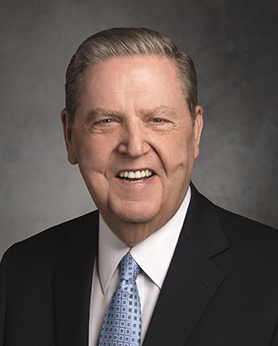
“This Do in Remembrance of Me” (Jeffrey R. Holland of the Quorum of the Twelve Apostles, October 1995 General Conference)


[The Sacrament] comes in what has been called “the most sacred, the most holy, of all the meetings of the Church” Perhaps we do not always attach that kind of meaning to our weekly sacramental service. How “sacred” and how “holy” is it? Do we see it as our passover, remembrance of our safety and deliverance and redemption? 

The hours that lay immediately ahead would change the meaning of all human history. It would be the crowning moment of eternity, the most miraculous of all the miracles. It would be the supreme contribution to a plan designed from before the foundation of the world for the happiness of every man, woman, and child who would ever live in it. The hour of atoning sacrifice had come. God’s own Son, his Only Begotten Son in the flesh, was about to become the Savior of the world.

The setting was Jerusalem. The season was that of the Passover, a celebration rich in symbolism for what was about to come. Long ago the troubled and enslaved Israelites had been “passed over,” spared, finally made free by the blood of a lamb sprinkled on the lintel and doorposts of their Egyptian homes (see Ex. 12:21–24). That, in turn, had been only a symbolic reiteration of what Adam and all succeeding prophets were taught from the beginning—that the pure and unblemished lambs offered from the firstlings of Israel’s flocks were a similitude, a token, a prefiguration of the great and last sacrifice of Christ which was to come (see Moses 5:5–8).

Now, after all those years and all those prophecies and all those symbolic offerings, the type and shadow was to become reality. On this night when Jesus’ mortal ministry was concluding, the declaration made by John the Baptist when that ministry had begun now meant more than ever—“Behold the Lamb of God” (John 1:29).

As a final and specially prepared Passover supper was ending, Jesus took bread, blessed and broke it, and gave it to his Apostles, saying, “Take, eat” (Matt. 26:26). “This is my body which is given for you: this do in remembrance of me” (Luke 22:19). In a similar manner he took the cup of wine, traditionally diluted with water, said a blessing of thanks for it, and passed it to those gathered about him, saying: “This cup is the new testament in my blood,” “which is shed … for the remission of sins.” “This do in remembrance of me.” “For as often as ye eat this bread, and drink this cup, ye do shew the Lord’s death till he come” (Luke 22:20; Matt. 26:28; Luke 22:19; 1 Cor. 11:26).

Since that upper room experience on the eve of Gethsemane and Golgotha, children of the promise have been under covenant to remember Christ’s sacrifice in this newer, higher, more holy and personal way.

With a crust of bread, always broken, blessed, and offered first, we remember his bruised body and broken heart, his physical suffering on the cross where he cried, “I thirst,” and finally, “My God, my God, why hast thou forsaken me?” (John 19:28; Matt. 27:46.)

The Savior’s physical suffering guarantees that through his mercy and grace (see 2 Ne. 2:8) every member of the human family shall be freed from the bonds of death and be resurrected triumphantly from the grave. Of course the time of that resurrection and the degree of exaltation it leads to are based upon our faithfulness.

With a small cup of water we remember the shedding of Christ’s blood and the depth of his spiritual suffering, anguish which began in the Garden of Gethsemane. There he said, “My soul is exceeding sorrowful, even unto death” (Matt. 26:38). He was in agony and “prayed more earnestly: and his sweat was as it were great drops of blood falling down to the ground” (Luke 22:44).

The Savior’s spiritual suffering and the shedding of his innocent blood, so lovingly and freely given, paid the debt for what the scriptures call the “original guilt” of Adam’s transgression (Moses 6:54). Furthermore, Christ suffered for the sins and sorrows and pains of all the rest of the human family, providing remission for all of our sins as well, upon conditions of obedience to the principles and ordinances of the gospel he taught (see 2 Ne. 9:21–23). As the Apostle Paul wrote, we were “bought with a price” (1 Cor. 6:20). What an expensive price and what a merciful purchase!

That is why every ordinance of the gospel focuses in one way or another on the atonement of the Lord Jesus Christ, and surely that is why this particular ordinance with all its symbolism and imagery comes to us more readily and more repeatedly than any other in our life. It comes in what has been called “the mostsacred, the most holy, of all the meetings of the Church” (Joseph Fielding Smith, Doctrines of Salvation, comp. Bruce R. McConkie, 3 vols., Salt Lake City: Bookcraft, 1954–56, 2:340).

Perhaps we do not always attach that kind of meaning to our weekly sacramental service. How “sacred” and how “holy” is it? Do we see it as our passover, remembrance of our safety and deliverance and redemption?

With so very much at stake, this ordinance commemorating our escape from the angel of darkness should be taken more seriously than it sometimes is. It should be a powerful, reverent, reflective moment. It should encourage spiritual feelings and impressions. As such it should not be rushed. It is not something to “get over” so that the real purpose of a sacrament meeting can be pursued. This is the real purpose of the meeting. And everything that is said or sung or prayed in those services should be consistent with the grandeur of this sacred ordinance.

The administration and passing of the sacrament is preceded by a hymn which all of us should sing. It doesn’t matter what kind of musical voice we have. Sacramental hymns are more like prayers anyway—and everyone can give voice to a prayer!

We may not know, we cannot tell,
What pains he had to bear,
But we believe it was for us
He hung and suffered there.

It is an important element of our worship to unite in such lyrical and moving expressions of gratitude.

In that sacred setting we ask you young men of the Aaronic Priesthood to prepare and bless and pass these emblems of the Savior’s sacrifice worthily and reverently. What a stunning privilege and sacred trust given at such a remarkably young age! I can think of no higher compliment heaven could pay you. We do love you. Live your best and look your best when you participate in the sacrament of the Lord’s Supper.

May I suggest that wherever possible a white shirt be worn by the deacons, teachers, and priests who handle the sacrament. For sacred ordinances in the Church we often use ceremonial clothing, and a white shirt could be seen as a gentle reminder of the white clothing you wore in the baptismal font and an anticipation of the white shirt you will soon wear into the temple and onto your missions.

That simple suggestion is not intended to be pharisaic or formalistic. We do not want deacons or priests in uniforms or unduly concerned about anything but the purity of their lives. But how our young people dress can teach a holy principle to us all, and it certainly can convey sanctity. As President David O. McKay taught, a white shirt contributes to the sacredness of the holy sacrament (see Conference Report, Oct. 1956, p. 89).

In the simple and beautiful language of the sacramental prayers those young priests offer, the principal word we hear seems to be remember. In the first and slightly longer prayer offered over the bread, mention is made of a willingness to take upon us the name of the Son of God and to keep the commandments he has given us.

Neither of those phrases is repeated in the blessing on the water, though surely both are assumed and expected. What is stressed in both prayers is that all of this is done in remembrance of Christ. In so participating we witness that we will always remember him, that we may always have his Spirit to be with us (see D&C 20:77, 79).

If remembering is the principal task before us, what might come to our memory when those plain and precious emblems are offered to us?

We could remember the Savior’s premortal life and all that we know him to have done as the great Jehovah, creator of heaven and earth and all things that in them are. We could remember that even in the Grand Council of Heaven he loved us and was wonderfully strong, that we triumphed even there by the power of Christ and our faith in the blood of the Lamb (see Rev. 12:10–11).

We could remember the simple grandeur of his mortal birth to just a young woman, one probably in the age range of those in our Young Women organization, who spoke for every faithful woman in every dispensation of time when she said, “Behold the handmaid of the Lord; be it unto me according to thy word” (Luke 1:38).

We could remember his magnificent but virtually unknown foster father, a humble carpenter by trade who taught us, among other things, that quiet, plain, unpretentious people have moved this majestic work forward from the very beginning, and still do so today. If you are serving almost anonymously, please know that so, too, did one of the best men who has ever lived on this earth.

We could remember Christ’s miracles and his teachings, his healings and his help. We could remember that he gave sight to the blind and hearing to the deaf and motion to the lame and the maimed and the withered. Then, on those days when we feel our progress has halted or our joys and views have grown dim, we can press forward steadfastly in Christ, with unshaken faith in him and a perfect brightness of hope (see 2 Ne. 31:19–20).

We could remember that even with such a solemn mission given to him, the Savior found delight in living; he enjoyed people and told his disciples to be of good cheer. He said we should be as thrilled with the gospel as one who had found a great treasure, a veritable pearl of great price, right on our own doorstep. We could remember that Jesus found special joy and happiness in children and said all of us should be more like them—guileless and pure, quick to laugh and to love and to forgive, slow to remember any offense.

We could remember that Christ called his disciples friends, and that friends are those who stand by us in times of loneliness or potential despair. We could remember a friend we need to contact or, better yet, a friend we need to make. In doing so we could remember that God often provides his blessings through the compassionate and timely response of another. For someone nearby we may be the means of heaven’s answer to a very urgent prayer.

We could—and should—remember the wonderful things that have come to us in our lives and that “all things which are good cometh of Christ” (Moro. 7:24). Those of us who are so blessed could remember the courage of those around us who face more difficulty than we, but who remain cheerful, who do the best they can, and trust that the Bright and Morning Star will rise again for them—as surely he will do (see Rev. 22:16).

On some days we will have cause to remember the unkind treatment he received, the rejection he experienced, and the injustice—oh, the injustice—he endured. When we, too, then face some of that in life, we can remember that Christ was also troubled on every side, but not distressed; perplexed, but not in despair; persecuted, but not forsaken; cast down, but not destroyed (see 2 Cor. 4:8–9).

When those difficult times come to us, we can remember that Jesus had to descend below all things before he could ascend above them, and that he suffered pains and afflictions and temptations of every kind that he might be filled with mercy and know how to succor his people in their infirmities (see D&C 88:6; Alma 7:11–12).

To those who stagger or stumble, he is there to steady and strengthen us. In the end he is there to save us, and for all this he gave his life. However dim our days may seem they have been darker for the Savior of the world.

In fact, in a resurrected, otherwise perfected body, our Lord of this sacrament table has chosen to retain for the benefit of his disciples the wounds in his hands and his feet and his side—signs, if you will, that painful things happen even to the pure and perfect. Signs, if you will, that pain in this world is not evidence that God doesn’t love you. It is the wounded Christ who is the captain of our soul—he who yet bears the scars of sacrifice, the lesions of love and humility and forgiveness.

Those wounds are what he invites young and old, then and now, to step forward and see and feel (see 3 Ne. 11:15; 3 Ne. 18:25). Then we remember with Isaiah that it was for each of us that our Master was “despised and rejected … ; a man of sorrows, and acquainted with grief” (Isa. 53:3). All this we could remember when we are invited by a kneeling young priest to remember Christ always.

We no longer include a supper with this ordinance, but it is a feast nevertheless. We can be fortified by it for whatever life requires of us, and in so doing we will be more compassionate to others along the way.

One request Christ made of his disciples on that night of deep anguish and grief was that they stand by him, stay with him in his hour of sorrow and pain. “Could ye not watch with me one hour?” he asked longingly (Matt. 26:40). I think he asks that again of us, every Sabbath day when the emblems of his life are broken and blessed and passed.

How great the wisdom and the love
That filled the courts on high
And sent the Savior from above
To suffer, bleed, and die!

“Oh, it is wonderful, wonderful to me!” (Hymns, 1985, no. 193). I bear witness of him who is the Wonder of it all, and I do so in his own name, even Jesus Christ, amen.

The Atonement and the Value of One Soul (M. Russell Ballard of the Quorum of the Twelve Apostles, April 2004 General Conference)

Source
If we could truly understand the Atonement of the Lord Jesus Christ, we would realize how precious is one son or daughter of God. I believe our Heavenly Father’s everlasting purpose for His children is generally achieved by the small and simple things we do for one another. At the heart of the English word atonement is the word one. If all mankind understood this, there would never be anyone with whom we would not be concerned, regardless of age, race, gender, religion, or social or economic standing. We would strive to emulate the Savior and would never be unkind, indifferent, disrespectful, or insensitive to others.

This past January our family suffered the tragic loss of our grandson Nathan in an airplane crash. Nathan had served in the Russian-speaking Baltic Mission. He loved the people and knew it was a privilege to serve the Lord. Three months after I officiated at his eternal marriage to his sweetheart, Jennifer, this accident took his life. Nathan’s being taken so suddenly from our mortal presence has turned each of our hearts and minds to the Atonement of the Lord Jesus Christ. While it is impossible for me to put into words the full meaning of the Atonement of Christ, I pray that I can explain what His Atonement means to me and our family and what it might also mean to you and yours.

The Savior’s precious birth, life, Atonement in the Garden of Gethsemane, suffering on the cross, burial in Joseph’s tomb, and glorious Resurrection all became a renewed reality for us. The Savior’s Resurrection assures all of us that someday we, too, will follow Him and experience our own resurrection. What peace, what comfort this great gift is which comes through the loving grace of Jesus Christ, the Savior and Redeemer of all mankind. Because of Him we know we can be with Nathan again.

There is no greater expression of love than the heroic Atonement performed by the Son of God. Were it not for the plan of our Heavenly Father, established before the world began, in a very real sense, all mankind—past, present, and future—would have been left without the hope of eternal progression. As a result of Adam’s transgression, mortals were separated from God (see Rom. 6:23) and would be forever unless a way was found to break the bands of death. This would not be easy, for it required the vicarious sacrifice of one who was sinless and who could therefore take upon Himself the sins of all mankind.

Thankfully, Jesus Christ courageously fulfilled this sacrifice in ancient Jerusalem. There in the quiet isolation of the Garden of Gethsemane, He knelt among the gnarled olive trees, and in some incredible way that none of us can fully comprehend, the Savior took upon Himself the sins of the world. Even though His life was pure and free of sin, He paid the ultimate penalty for sin—yours, mine, and everyone who has ever lived. His mental, emotional, and spiritual anguish were so great they caused Him to bleed from every pore (see Luke 22:44; D&C 19:18). And yet Jesus suffered willingly so that we might all have the opportunity to be washed clean—through having faith in Him, repenting of our sins, being baptized by proper priesthood authority, receiving the purifying gift of the Holy Ghost by confirmation, and accepting all other essential ordinances. Without the Atonement of the Lord, none of these blessings would be available to us, and we could not become worthy and prepared to return to dwell in the presence of God.

The Savior later endured the agony of inquisition, cruel beatings, and death by crucifixion on the cross at Calvary. Recently, there has been a great deal of commentary about this, none of which has made clear the singular point that no one had the power to take the Savior’s life from Him. He gave it as a ransom for us all. As the Son of God, He had the power to alter the situation. Yet the scriptures clearly state that He yielded Himself to scourging, humiliation, suffering, and finally crucifixion because of His great love towards the children of men (see 1 Ne. 19:9–10).

The Atonement of Jesus Christ was an indispensable part of our Heavenly Father’s plan for His Son’s earthly mission and for our salvation. How grateful we should be that our Heavenly Father did not intercede but rather withheld His fatherly instinct to rescue His Beloved Son. Because of His eternal love for you and for me, He allowed Jesus to complete His foreordained mission to become our Redeemer. The gift of resurrection and immortality is given freely through the loving grace of Jesus Christ to all people of all ages, regardless of their good or evil acts. And to those who choose to love the Lord and who show their love and faith in Him by keeping His commandments and qualifying for the full blessings of the Atonement, He offers the additional promise of exaltation and eternal life, which is the blessing of living in the presence of God and His Beloved Son forever.

We often sing a hymn that expresses what I feel when I consider the Savior’s benevolent, atoning sacrifice:

I stand all amazed at the love Jesus offers me,
Confused at the grace that so fully he proffers me.
I tremble to know that for me he was crucified,
That for me, a sinner, he suffered, he bled and died.
(“I Stand All Amazed,” Hymns, no. 193)

Jesus Christ, the Savior and Redeemer of all mankind, is not dead. He lives—the resurrected Son of God lives—that is my testimony, and He guides the affairs of His Church today.

In the spring of 1820, a pillar of light illuminated a grove of trees in upstate New York. Our Heavenly Father and His Beloved Son appeared to the Prophet Joseph Smith. This experience began the restoration of powerful doctrinal truths that had been lost for centuries. Among those truths that had been dimmed by the darkness of apostasy was the stirring reality that we are all the spirit sons and daughters of a loving God who is our Father. We are part of His family. He is not a father in some allegorical or poetic sense. He is literally the Father of our spirits. He cares for each one of us. Though this world has a way of diminishing and demeaning men and women, the reality is we are all of royal, divine lineage. In that unprecedented appearance of the Father and the Son in the Sacred Grove, the very first word spoken by the Father of us all was the personal name of Joseph. Such is our Father’s personal relationship with each of us. He knows our names and yearns for us to become worthy to return to live with Him.

Through the Prophet Joseph Smith came the Restoration of the gospel. The Lord Jesus Christ has once again revealed, through His chosen prophet, the ordinances and the priesthood authority to administer them for the salvation of all who will believe.

Another prophet in another time was shown “the nations of the earth” (Moses 7:23). “And the Lord showed Enoch all things, even unto the end of the world” (Moses 7:67). Enoch saw also that Satan “had a great chain in his hand, and it veiled the whole face of the earth with darkness; and he [Satan] looked up and laughed” (Moses 7:26).

With all that Enoch beheld, there was one thing that seemed to capture his attention above everything else. Enoch saw God look “upon the residue of the people, and He wept” (Moses 7:28). The sacred record then has Enoch asking God over and over: “How is it that thou canst weep? … How is it thou canst weep?” (Moses 7:29, 31).

The Lord answered Enoch: “Behold these thy brethren; they are the workmanship of mine own hands … ; unto thy brethren have I … also given commandment, that they should love one another, and that they should choose me, their Father; but behold, they are without affection, and they hate their own blood” (Moses 7:32–33).

Enoch saw the conditions of these latter days. He and other early prophets knew that only as we accept the Atonement in our lives and strive to live the gospel can we meet the challenges of life and find peace, joy, and happiness. Coming to understand this great gift is an individual pursuit for each child of God.

Brothers and sisters, I believe that if we could truly understand the Atonement of the Lord Jesus Christ, we would realize how precious is one son or daughter of God. I believe our Heavenly Father’s everlasting purpose for His children is generally achieved by the small and simple things we do for one another. At the heart of the English word atonement is the word one. If all mankind understood this, there would never be anyone with whom we would not be concerned, regardless of age, race, gender, religion, or social or economic standing. We would strive to emulate the Savior and would never be unkind, indifferent, disrespectful, or insensitive to others.

If we truly understood the Atonement and the eternal value of each soul, we would seek out the wayward boy and girl and every other wayward child of God. We would help them to know of the love Christ has for them. We would do all that we can to help prepare them to receive the saving ordinances of the gospel.

Surely, if the Atonement of Christ was foremost in the minds of ward and branch leaders, no new or reactivated member would ever be neglected. Because every soul is so precious, leaders will counsel together to see that each one is taught the doctrines of the gospel of Jesus Christ.

When I think of Nathan and how precious he is to us, I can see and feel more clearly how our Heavenly Father must feel about all of His children. We do not want God to weep because we did not do all we could to share with His children the revealed truths of the gospel. I pray that every one of our youth will seek to know the blessings of the Atonement and that they will strive to be worthy to serve the Lord in the mission field. Surely many more senior couples and others whose health will permit would eagerly desire to serve the Lord as missionaries if they would ponder over the meaning of the atoning sacrifice of the Lord Jesus Christ. It was Jesus who said, “If … you should labor all your days in crying repentance unto this people, and bring, save it be one soul unto me, how great shall be your joy with him in the kingdom of my Father!” (D&C 18:15; emphasis added). Not only that, but great shall be the Lord’s joy in the soul that repenteth! For precious unto Him is the one.

Brothers and sisters, our Heavenly Father has reached out to us through the Atonement of our Savior. He invites all to “come unto Christ, who is the Holy One of Israel, and partake of his salvation, and the power of his redemption” (Omni 1:26). He has taught us that it is through our faithful adherence to gospel principles, through receiving the saving ordinances that have been restored, through continual service, and by enduring to the end that we can return to His sacred presence. What possible thing in the whole world is remotely as important as to know this?

Sadly, in today’s world, a person’s importance is often judged by the size of the audience before which he or she performs. That is how media and sports programs are rated, how corporate prominence is sometimes determined, and often how governmental rank is obtained. That may be why roles such as father, mother, and missionary seldom receive standing ovations. Fathers, mothers, and missionaries “play” before very small audiences. Yet, in the eyes of the Lord, there may be only one size of audience that is of lasting importance—and that is just one, each one, you and me, and each one of the children of God. The irony of the Atonement is that it is infinite and eternal, yet it is applied individually, one person at a time.

There is a level at which the child’s hymn “I Am a Child of God” (Hymns, no. 301) harmonizes with the music of eternity. We are children of God. Each one of us is precious to the point of bringing the Lord God Almighty to a fulness of joy if we are faithful, or to tears if we are not.

As the resurrected Savior said to the Nephites, so He might say to us today:

“Blessed are ye because of your faith. And now behold, my joy is full.

“And when he had said these words, he wept, and the multitude bare record of it, and he took their little children, one by one, and blessed them, and prayed unto the Father for them” (3 Ne. 17:20–21; emphasis added).

Brothers and sisters, never, never underestimate how precious is the one. Remember always the simple admonition of the Lord: “If ye love me, keep my commandments” (John 14:15). Always strive to live worthy of the sacred full blessings of the Atonement of the Lord Jesus Christ. In our sorrow over the separation from our dear Nathan has come the peace that only the Savior and Redeemer can give. Our family has turned to Him, one by one; and we now sing with greater appreciation and understanding:

Oh, it is wonderful that he should care for me
Enough to die for me!
Oh, it is wonderful, wonderful to me!
(“I Stand All Amazed,” Hymns, no. 193)

My dear brothers and sisters, may you give to others and receive for yourselves every blessing the Atonement of the Lord Jesus Christ offers, I humbly pray, in the name of Jesus Christ, amen.

Sunday Will Come (Joseph B. Wirthlin of the Quorum of the Twelve Apostles, October 2006 General Conference)

Elder Joseph B. Wirthlin
Source
I think of how dark that Friday was when Christ was lifted up on the cross.... The despair did not linger because on Sunday, the resurrected Lord burst the bonds of death.... Each of us will have our own Fridays—those days when the universe itself seems shattered and the shards of our world lie littered about us in pieces. We all will experience those broken times when it seems we can never be put together again.... But I testify to you in the name of the One who conquered death—Sunday will come.

I am grateful to be with you today and to draw strength from your testimonies. More than words can express, I am grateful for your kind words of support, your expressions of love, and your prayers.

Today I would like to indulge in a few personal memories.

I was born of goodly parents. From my father, Joseph L. Wirthlin, I learned the values of hard work and compassion. He was bishop of our ward during the Great Depression. He possessed a genuine concern for those in distress. He reached out to those in need not because it was his duty but because it was his sincere desire.

He tirelessly cared for and blessed the lives of many who suffered. In my mind, he was an ideal bishop.

Those who knew my father knew how active he was. Someone once told me that he could do the work of three men. He rarely slowed down. In 1938 he was operating a successful business when he received a call from the President of the Church, Heber J. Grant.

President Grant told him they were reorganizing the Presiding Bishopric that day and wanted my father to serve as counselor to LeGrand Richards. This caught my father by surprise, and he asked if he could pray about it first.

President Grant said, “Brother Wirthlin, there are only 30 minutes before the next session of conference, and I want to have some rest. What do you say?”

Of course, my father said yes. He served 23 years, 9 of them as Presiding Bishop of the Church.

My father was 69 years old when he passed away. I happened to be with him when he suddenly collapsed. Soon after, he was gone.

I often think about my father. I miss him.

My mother, Madeline Bitner, was another great influence in my life. In her youth she was a fine athlete and a champion sprinter. She was always kind and loving, but her pace was exhausting. Often she would say, “Hurry up.” And when she did, we picked up the pace. Perhaps that was one of the reasons I had quick acceleration when I played football.

My mother had great expectations for her children and expected the best from them. I can still remember her saying, “Don’t be a scrub. You must do better.” Scrub was her word for someone who was lazy and not living up to his potential.

My mother passed away when she was 87 years old, and I think about her often and miss her more than I can say.

My younger sister Judith was an author, composer, and educator. She loved many things, including the gospel, music, and archaeology. Judith’s birthday was a few days before mine. Every year I would give her a crisp one-dollar bill as my birthday present to her. Three days later she would give me 50 cents as her birthday present to me.

Judith passed away a few years ago. I miss her and think of her often.

And that brings me to my wife, Elisa. I remember the first time I met her. As a favor to a friend, I had gone to her home to pick up her sister, Frances. Elisa opened the door, and at least for me, it was love at first sight.

I think she must have felt something too, for the first words I ever remember her saying were, “I knew who you was.”

Elisa was an English major.

To this day I still cherish those five words as some of the most beautiful in human language.

She loved to play tennis and had a lightning serve. I tried to play tennis with her, but I finally quit after coming to the realization that I couldn’t hit what I couldn’t see.

She was my strength and my joy. Because of her, I am a better man, husband, and father. We married, had eight children, and walked together through 65 years of life.

I owe more to my wife than I can possibly express. I don’t know if there ever was a perfect marriage, but, from my perspective, I think ours was.

When President Hinckley spoke at Sister Wirthlin’s funeral, he said that it is a devastating, consuming thing to lose someone you love. It gnaws at your soul.

He was right. As Elisa was my greatest joy, now her passing is my greatest sorrow.

In the lonely hours I have spent a great deal of time thinking about eternal things. I have contemplated the comforting doctrines of eternal life.

During my life I have heard many sermons on the Resurrection. Like you, I can recite the events of that first Easter Sunday. I have marked in my scriptures passages regarding the Resurrection and have close at hand many of the key statements uttered by latter-day prophets on this subject.

We know what the Resurrection is—the reuniting of the spirit and body in its perfect form. 1

President Joseph F. Smith said “that those from whom we have to part here, we will meet again and see as they are. We will meet the same identical being that we associated with here in the flesh.” 2

President Spencer W. Kimball amplified this when he said, “I am sure that if we can imagine ourselves at our very best, physically, mentally, spiritually, that is the way we will come back.” 3

When we are resurrected, “this mortal body is raised to an immortal body. … [We] can die no more.” 4

Can you imagine that? Life at our prime? Never sick, never in pain, never burdened by the ills that so often beset us in mortality?

The Resurrection is at the core of our beliefs as Christians. Without it, our faith is meaningless. The Apostle Paul said, “If Christ be not risen, then is our preaching vain, and [our] faith is also vain.” 5

In all the history of the world there have been many great and wise souls, many of whom claimed special knowledge of God. But when the Savior rose from the tomb, He did something no one had ever done. He did something no one else could do. He broke the bonds of death, not only for Himself but for all who have ever lived—the just and the unjust. 6

When Christ rose from the grave, becoming the firstfruits of the Resurrection, He made that gift available to all. And with that sublime act, He softened the devastating, consuming sorrow that gnaws at the souls of those who have lost precious loved ones.

I think of how dark that Friday was when Christ was lifted up on the cross.

On that terrible Friday the earth shook and grew dark. Frightful storms lashed at the earth.

Those evil men who sought His life rejoiced. Now that Jesus was no more, surely those who followed Him would disperse. On that day they stood triumphant.

On that day the veil of the temple was rent in twain.

Mary Magdalene and Mary, the mother of Jesus, were both overcome with grief and despair. The superb man they had loved and honored hung lifeless upon the cross.

On that Friday the Apostles were devastated. Jesus, their Savior—the man who had walked on water and raised the dead—was Himself at the mercy of wicked men. They watched helplessly as He was overcome by His enemies.

On that Friday the Savior of mankind was humiliated and bruised, abused and reviled.

It was a Friday filled with devastating, consuming sorrow that gnawed at the souls of those who loved and honored the Son of God.

I think that of all the days since the beginning of this world’s history, that Friday was the darkest.

But the doom of that day did not endure.

The despair did not linger because on Sunday, the resurrected Lord burst the bonds of death. He ascended from the grave and appeared gloriously triumphant as the Savior of all mankind.

And in an instant the eyes that had been filled with ever-flowing tears dried. The lips that had whispered prayers of distress and grief now filled the air with wondrous praise, for Jesus the Christ, the Son of the living God, stood before them as the firstfruits of the Resurrection, the proof that death is merely the beginning of a new and wondrous existence.

Each of us will have our own Fridays—those days when the universe itself seems shattered and the shards of our world lie littered about us in pieces. We all will experience those broken times when it seems we can never be put together again. We will all have our Fridays.

But I testify to you in the name of the One who conquered death—Sunday will come. In the darkness of our sorrow, Sunday will come.

No matter our desperation, no matter our grief, Sunday will come. In this life or the next, Sunday will come.

I testify to you that the Resurrection is not a fable. We have the personal testimonies of those who saw Him. Thousands in the Old and New Worlds witnessed the risen Savior. They felt the wounds in His hands, feet, and side. They shed tears of unrestrained joy as they embraced Him.

After the Resurrection, the disciples became renewed. They traveled throughout the world proclaiming the glorious news of the gospel.

Had they chosen, they could have disappeared and returned to their former lives and occupations. In time, their association with Him would have been forgotten.

They could have denied the divinity of Christ. Yet they did not. In the face of danger, ridicule, and threat of death, they entered palaces, temples, and synagogues boldly proclaiming Jesus the Christ, the resurrected Son of the living God.

Many of them offered as a final testimony their own precious lives. They died as martyrs, the testimony of the risen Christ on their lips as they perished.

The Resurrection transformed the lives of those who witnessed it. Should it not transform ours?

We will all rise from the grave. And on that day my father will embrace my mother. On that day I will once again hold in my arms my beloved Elisa.

Because of the life and eternal sacrifice of the Savior of the world, we will be reunited with those we have cherished.

On that day we will know the love of our Heavenly Father. On that day we will rejoice that the Messiah overcame all that we could live forever.

Because of the sacred ordinances we receive in holy temples, our departure from this brief mortality cannot long separate relationships that have been fastened together with cords made of eternal ties.

It is my solemn testimony that death is not the end of existence. “If in this life only we have hope in Christ, we are of all men most miserable.” 7 Because of the risen Christ, “death is swallowed up in victory.” 8

Because of our beloved Redeemer, we can lift up our voices, even in the midst of our darkest Fridays, and proclaim, “O death, where is thy sting? O grave, where is thy victory?” 9

When President Hinckley spoke of the terrible loneliness that comes to those who lose the ones they love, he also promised that in the quiet of the night a still, unheard voice whispers peace to our soul: “All is well.”

I am grateful beyond measure for the sublime true doctrines of the gospel and for the gift of the Holy Ghost, which has whispered to my soul the comforting and peaceful words promised by our beloved prophet.

From the depths of my sorrow, I have rejoiced in the glory of the gospel. I rejoice that the Prophet Joseph Smith was chosen to restore the gospel to the earth in this last dispensation. I rejoice that we have a prophet, President Gordon B. Hinckley, who directs the Lord’s Church in our day.

May we understand and live in thanksgiving for the priceless gifts that come to us as sons and daughters of a loving Heavenly Father and for the promise of that bright day when we shall all rise triumphant from the grave.

That we may always know that no matter how dark our Friday, Sunday will come is my prayer, in the name of Jesus Christ, amen.

References:

 1. See Alma 11:43.

 2.  Teachings of Presidents of the Church: Joseph F. Smith (1998), 91.

 3.  The Teachings of Spencer W. Kimball, ed. Edward L. Kimball (1982), 45.

 4.  Alma 11:45.

 5.  1 Corinthians 15:14.

 6. See John 5:28–29.

 7.  1 Corinthians 15:19.

 8.  1 Corinthians 15:54.

 9.  1 Corinthians 15:55.